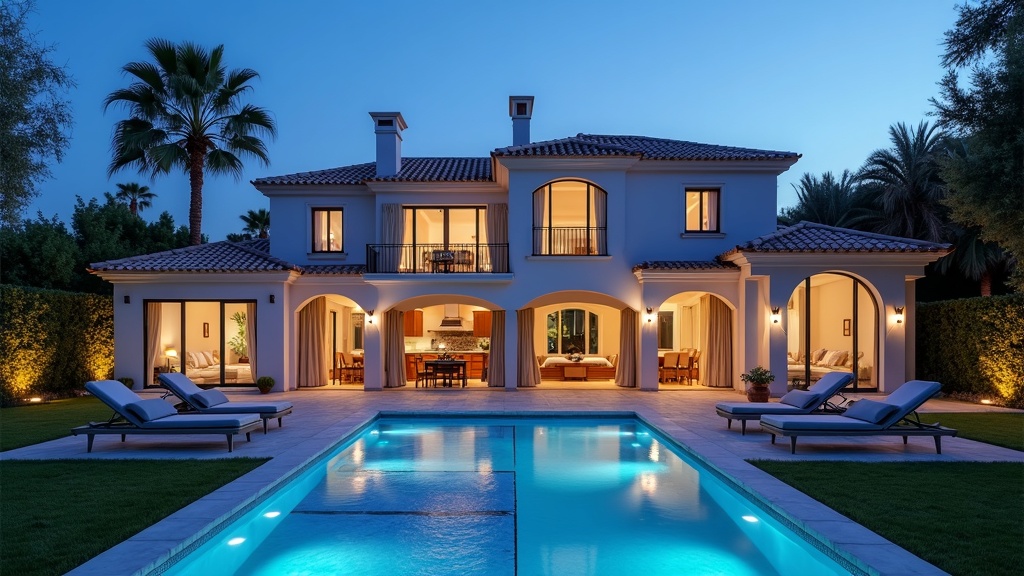
For UK homebuyers, the Costa del Sol generally offers a more diverse cultural experience, a slightly higher cost of living in prime areas like Marbella, and a streamlined property purchasing process compared to the Algarve. Both boast excellent climates, but Spain provides a wider array of property types and lifestyle options, from vibrant city living to tranquil mountain retreats, while the Algarve excels in golf and beach-centric lifestyles.
As Hans Beeckman, a Dutch-born Accredited Property Specialist with many years of experience, I’ve personally guided over 500 international families through the Spanish property process. In my journey working with Del Sol Prime Homes and its partners, we often find UK buyers weighing their options between the sun-drenched coasts of Southern Europe. The Costa del Sol and the Algarve are consistently at the top of their lists. Both offer an alluring Mediterranean lifestyle, but they cater to slightly different aspirations and practicalities. Let’s dive into a direct comparison to help you, as a UK homebuyer, make an informed decision for your Southern European dream.
Costa del Sol vs. Algarve: Understanding the Property Market Dynamics
For more details, check out our guide on family life in Costa del Sol. For more details, check out our guide on digital nomad life in Costa del Sol. For more details, check out our guide on Costa del Sol for UK retirees. When you're considering a property purchase abroad, the market dynamics are paramount. In my 35+ years of combined experience in this region, we've seen significant shifts, but the demand for quality properties in both these areas remains strong. Understanding these nuances is key to a sound investment.
Property Types and Investment Potential: What's on Offer?
The Costa del Sol, particularly areas like Marbella, Estepona, and Benalmádena, boasts an incredibly diverse property portfolio. You'll find everything from luxurious frontline beach villas and sleek, modern apartments to more traditional townhouses and charming country fincas. New developments are continually emerging, offering cutting-edge design and amenities. For example, in Marbella, new build apartments in prime locations currently range from €400,000 to well over €2 million, with villas starting from €800,000 to upwards of €10 million [CITATION_NEEDED: Andalusian Property Market Report Q1 2024].
The Algarve, by contrast, is often characterized by its beautiful villas, particularly around golf resorts, and holiday apartments. While there’s undeniable charm and quality, the range can feel slightly less varied than the Costa del Sol’s bustling market. Both regions have seen robust capital appreciation, particularly in sought-after prime locations. We often advise clients to look at areas with strong tourism appeal when considering rental yield potential, which is high in both places. [INTERNAL_LINK: rental income potential Costa del Sol]
Price Points and Affordability: Where Does Your Pound Go Further?
Generally, you'll find that prime locations on the Costa del Sol, such as Marbella's Golden Mile or Puerto Banús, command higher prices per square meter. However, the sheer size of the Costa del Sol means there are excellent value options in towns like Estepona, Duquesa, or even further inland in Mijas or Coin. For example, a two-bedroom apartment in Estepona can be found from €250,000, while similar in Marbella might start at €400,000 [CITATION_NEEDED: Spanish Property Portal Data Q2 2024].
The Algarve offers competitive pricing, especially for golf properties or those slightly set back from the coast. While price points can be similar in some areas, the very top end of the luxury market might see slightly less extreme pricing than Marbella's most exclusive enclaves. Always remember that affordability is relative to your specific needs and priorities, and a clear budget is crucial. [INTERNAL_LINK: budgeting for a Spanish property purchase]
Lifestyle and Cultural Immersion: Finding Your Southern European Rhythm
Beyond bricks and mortar, the essence of Southern European living lies in its lifestyle and culture. Having lived and worked here for many years, I can tell you that Spain and Portugal offer distinct flavours of Mediterranean life.
Cultural Vibrancy and Social Scene: From Flamenco to Fado
The Costa del Sol is undeniably vibrant and cosmopolitan. You'll find a rich tapestry of Spanish culture, from authentic flamenco shows and traditional fiestas to modern art galleries and Michelin-starred restaurants. Cities like Málaga and Marbella offer an international feel with world-class events, dining, and nightlife. The social scene is diverse, catering to retirees seeking tranquility, families looking for community, and remote workers who want connectivity.
The Algarve, while charming and welcoming, tends to offer a more relaxed pace. Its culture is deeply rooted in its maritime history, with beautiful fishing villages, stunning coastal trails, and a focus on outdoor activities. While it has its own unique festivals and traditions, the overall cultural immersion can feel less intense than Spain's dynamic scene. For UK residents, the Algarve can feel very familiar due to a strong expatriate presence, which can be a comfort for some but a barrier to full integration for others. [INTERNAL_LINK: integrating into expat life Costa del Sol]
Climate and Activities: Sun, Sea, and More
Both regions boast fantastic climates, with over 300 days of sunshine a year. The Costa del Sol, living up to its name, offers mild winters and hot summers, perfect for beach life, golf, and enjoying al fresco dining year-round. Its mountainous backdrop provides opportunities for hiking, cycling, and even skiing in the nearby Sierra Nevada during winter months. As someone who enjoys the outdoors, I appreciate the diverse activities available, from sailing in Estepona to exploring the white villages of Andalusia.
The Algarve shares a similar climate but is particularly renowned for its world-class golf courses and stunning, dramatic coastline with iconic rock formations. Water sports are popular, and its quieter beaches offer a peaceful escape. If your primary focus is golf and serene coastal living, the Algarve holds strong appeal. However, if you crave a broader array of activities, from cultural exploration to diverse urban experiences, the Costa del Sol might offer more breadth.
Legal and Financial Considerations: Navigating the Bureaucracy
As an Accredited Property Specialist, guiding clients through the legal and financial maze is a cornerstone of my service. While both Spain and Portugal are EU members, their property laws and tax systems have distinct differences that you, as a UK homebuyer, need to understand.
Property Purchase Process: Steps and Timelines
In Spain, the property purchase process for non-residents is relatively straightforward, but it requires diligent legal representation. Key steps include signing a reservation contract, obtaining your NIE number (foreigner identification number), conducting due diligence, signing a private purchase contract, and finally, signing the public deed at a notary. Typically, a resale property takes 8-12 weeks from reservation to completion, while new builds can take longer depending on construction schedules. We always advise working with an independent lawyer who specializes in Spanish property law. [INTERNAL_LINK: spanish property buying process for UK buyers]
Portugal’s process is also well-defined, often starting with a Promissory Contract (Contrato Promessa de Compra e Venda), followed by due diligence and then the final deed. Both countries require specific documentation and adhere to strict timelines. We’ve found that while the basic steps are similar, the specific documents required and local bureaucratic practices can vary, making expert guidance invaluable.
- **Key Differences:** Spain generally requires the NIE number early in the process, while in Portugal, a NIF (Tax Identification Number) is essential.
- **Our Advice**: Never underestimate the importance of a good lawyer in either country. Their expertise will protect your interests.
Taxation and Fees: Understanding the Costs Involved
When buying property in Spain, you'll encounter several taxes and fees. For resale properties, the main tax is the Property Transfer Tax (ITP), which varies by autonomous community. In Andalucía, it's a flat rate of 7% [CITATION_NEEDED: Junta de Andalucía tax rates 2025]. For new build properties, you'll pay 10% VAT (IVA) plus 1.2% Stamp Duty (AJD). On top of this, you’ll have notary fees, land registry fees, and legal fees, typically adding 10-14% to the purchase price.
In Portugal, the equivalent of Property Transfer Tax is Imposto Municipal sobre as Transacções Onerosas de Imóveis (IMT), which is on a progressive scale up to 8%. You also pay Stamp Duty (Imposto de Selo) at 0.8%, plus notary and registration fees. Ongoing ownership costs also differ, with IBI (council tax) in Spain and IMI (municipal property tax) in Portugal. It’s crucial to get a clear breakdown of all costs upfront from your lawyer before committing. [INTERNAL_LINK: property taxes in Spain for non-residents]
Residency and Visa Requirements: Post-Brexit Implications for UK Buyers
Since Brexit, UK citizens can no longer spontaneously move to Spain or Portugal and have to apply for a visa. For those looking to reside, Spain offers options like the Non-Lucrative Visa or the Golden Visa. The Spanish Golden Visa requires an investment of €500,000 or more in real estate, offering residency rights [CITATION_NEEDED: Spanish Golden Visa requirements 2024].
Portugal also has a Golden Visa scheme, traditionally known for real estate investment, though recent changes restrict property investment in certain areas [CITATION_NEEDED: Portuguese Golden Visa changes 2023]. It also offers a D7 Visa for retirees or those with sufficient passive income. Both countries have specific income requirements, healthcare stipulations, and application processes for various visa types. My experience tells me that planning your visa strategy well in advance is absolutely critical. We can connect you with specialist immigration lawyers for tailored advice. [INTERNAL_LINK: Spanish visa options for UK citizens]
Amenities and Infrastructure: Practicalities for Daily Life
Living abroad isn't just about the sun; it's about the practicalities of daily life. Access to quality healthcare, education, transport, and communication networks significantly impacts your experience.
Healthcare and Education: Providing for Your Family
Spain boasts an excellent public healthcare system, which is accessible to residents who contribute to social security. Private healthcare is also widely available, with many international clinics and hospitals, particularly on the Costa del Sol. For example, Marbella has several top-tier private hospitals offering multilingual services. [CITATION_NEEDED: Spanish Public Healthcare System Overview 2024]
Education on the Costa del Sol is diverse. You’ll find numerous international schools following British, American, or other curricula, especially around Marbella and Fuengirola, catering to the expat community. The public Spanish schooling system is also robust. [INTERNAL_LINK: international schools Costa del Sol]
Portugal's healthcare system is also good, with public and private options. The Algarve has good regional hospitals and private clinics. International schools are present in the Algarve, but perhaps not with the same density or variety as the Costa del Sol due to the differing population sizes and concentrations.
Connectivity and Travel: Getting Around and Staying in Touch
Malaga Airport (AGP) serves the Costa del Sol and is one of Spain’s busiest, offering excellent connections to the UK and across Europe. Major road networks connect all towns efficiently. The region also benefits from high-speed AVE train connections, linking Malaga to Madrid and other major Spanish cities. This robust infrastructure makes travel and daily commutes easy.
Faro Airport (FAO) is the main gateway to the Algarve, with frequent flights to the UK. The road network is good, with an efficient motorway system. While not as extensive as Spain's high-speed rail, regional train lines and buses serve most areas. For me, the connectivity of the Costa del Sol, especially with its extensive flight options and high-speed rail, gives it a slight edge for those who travel frequently or have family visiting often.
Expat Community and Integration: Feeling at Home
The Costa del Sol has a long-established and thriving international community. There are countless expat groups, clubs, and societies, making it easy to meet like-minded individuals and integrate socially. While learning Spanish is always encouraged and appreciated, you can certainly navigate daily life in English in many parts of the Costa del Sol.
The Algarve also has a significant, well-established expat community, particularly from the UK, making it a comfortable transition for many British buyers. The level of English spoken is generally high in tourist areas. The choice between the two often comes down to the desired scale of the expat community and your preference for cultural immersion vs. familiarity.
Conclusion: Your Ideal Southern European Home Awaits
Having facilitated over €120 million in property transactions and helped hundreds of families, I’ve seen firsthand that the 'best' destination is always the one that aligns perfectly with your individual priorities. Both the Costa del Sol and the Algarve offer beautiful climates, stunning properties, and a relaxed Southern European lifestyle.
If you're seeking a dynamic, cosmopolitan environment with a rich cultural tapestry, diverse property options, and excellent connectivity, the Costa del Sol – from the vibrant energy of Marbella to the authentic charm of Estepona – is likely to be your ideal match. We see this often with families looking for international schools or remote workers who appreciate a lively social scene. While property in prime areas can be pricier, the value in other municipalities is undeniable.
If your dream revolves more around serene golf courses, picturesque beaches, and a slightly quieter, more established British expat community, the Algarve presents a compelling alternative. For many retirees or those seeking a very specific leisure-focused lifestyle, it truly shines.
Ultimately, the decision between the Costa del Sol and the Algarve boils down to a personal blend of lifestyle aspirations, budget, and desired level of cultural immersion. We invite you to experience the Costa del Sol firsthand, and perhaps we can share a coffee overlooking the Mediterranean as we discuss your property dreams in more detail. [INTERNAL_LINK: contact Del Sol Prime Homes]