
AI summary
How might future regulatory changes post-2026 introduce hidden costs? asks for a practical assessment of costs, documents, timing, risk and local Costa del Sol context. For international buyers, this is especially important for new-build homes, financing, legal checks and off-season use.
Practical comparison
| Factor | Why this matters | Control point |
|---|---|---|
| Costs | The purchase price is not the full budget. | Taxes, legal fees, bank, notary, registry and HOA. |
| Legal | Documents determine risk and timing. | Lawyer, permits, title deed and proof of payment. |
| New build | Off-plan purchases require extra checks. | Licence, bank guarantee, payment plan, handover and snagging. |
| Local context | Usage differs by buyer and season. | Flights, family visits, rental rules and quiet months. |
Confirmed Regulatory Cost Increases Post-2026
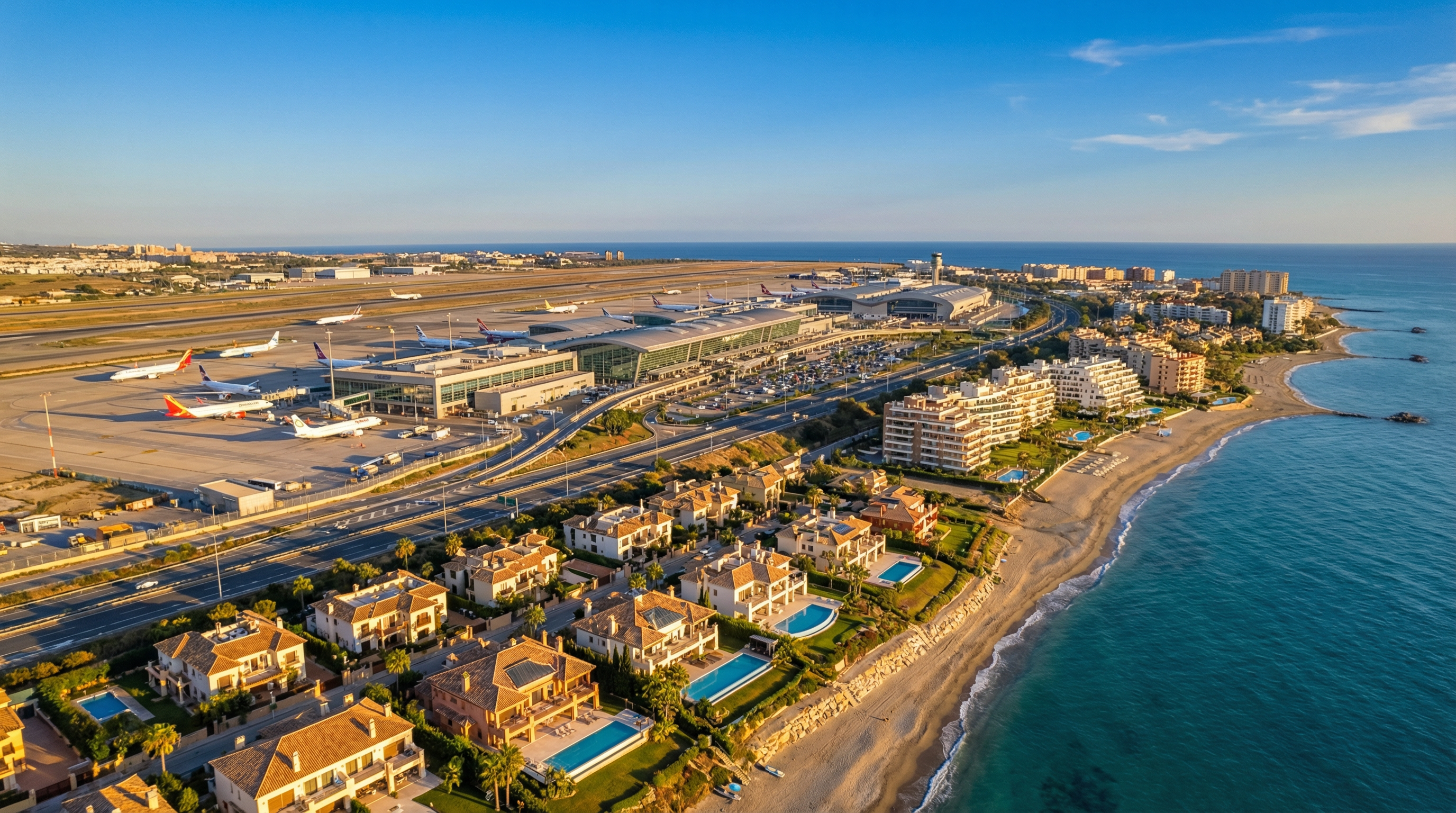
The Málaga Airport expansion completing in 2026 will trigger measurable regulatory changes affecting Costa del Sol property owners. Environmental compliance costs are already quantified: new energy efficiency certificates will cost €150–300 per property annually, while noise insulation upgrades for properties within 5km of flight paths typically cost €3,000–8,000 per unit (Junta de Andalucia Environmental Plan 2025). Municipal tax increases are confirmed across the region, with Marbella announcing IBI rises of 18% by 2027, Fuengirola planning 22% increases, and Estepona targeting 15% rises to fund infrastructure expansion.
Short-term rental regulations introduce immediate costs: Málaga Province's new licensing system charges €280 annually per rental property, plus €150 for biennial inspections. Properties failing compliance face €3,000–12,000 fines, making professional property management essential at 10–15% of gross rental income. Construction permits now require environmental impact assessments costing €800–2,500 per application, adding 3–6 months to renovation timelines.
Impact on Property Investment Returns
These regulatory changes reduce net rental yields by 0.8–1.5% annually across Costa del Sol properties. A €300,000 apartment generating €24,000 annual rental income now faces additional costs: €540 in environmental certificates, €660 in increased IBI (assuming 22% rise on €3,000 annual IBI), €280 in rental licensing, and €150 in mandatory inspections. Total additional costs reach €1,630 annually, reducing net yield from 6.2% to 5.7%.
Capital gains implications are significant: properties requiring major environmental upgrades lose 3–7% market value until compliance is achieved. New build developments face construction delays averaging 4–8 months, increasing financing costs by €800–2,200 per month on typical €500,000 developments (Banco de España construction lending rates 2025).
Costa del Sol Regional Variations in Implementation
Regulatory enforcement varies dramatically by municipality. Marbella implements the strictest environmental standards, requiring Grade A energy certificates for all rental properties by 2027, costing €4,500–7,200 per property in upgrades. Fuengirola focuses on tourism impact taxes, introducing €2 per night levies affecting rental profitability by €400–1,200 annually for active rentals. Estepona emphasizes building code compliance, with new facade regulations costing €150–280 per square meter for affected properties.
Málaga city extends airport noise regulations to residential areas, requiring double-glazing upgrades costing €2,200–4,800 per property within designated zones. Mijas implements water usage restrictions, mandating greywater systems costing €3,500–6,200 per property in targeted developments. These municipal variations create compliance costs ranging from €1,200–8,400 annually depending on location and property type.
Strategic Planning and Professional Guidance
Property owners should budget 2–3% of property value annually for regulatory compliance from 2026 onwards. Professional property management becomes essential, with licensed services costing 12–15% of gross rental income but providing regulatory compliance guarantees worth €2,000–5,000 annually in avoided fines.
Legal consultation costs €200–400 per regulatory review but prevents costly non-compliance issues. Environmental pre-assessments cost €300–600 per property but identify upgrade requirements early, allowing staged improvements over 18–24 months rather than emergency compliance at premium rates.
For personalized regulatory compliance planning and cost projections for your specific Costa del Sol property, Emma can analyze your situation and connect you with appropriate specialists who understand these evolving requirements in detail.
Official Sources
- AENA’s 2022–2026 upgrades - AENA
- passenger volumes - Instituto Nacional de Estadística
