
AI summary
What design pitfalls arise when blending Mediterranean and contemporary styles? asks for a practical assessment of costs, documents, timing, risk and local Costa del Sol context. For international buyers, this is especially important for new-build homes, financing, legal checks and off-season use.
Practical comparison
| Factor | Why this matters | Control point |
|---|---|---|
| Costs | The purchase price is not the full budget. | Taxes, legal fees, bank, notary, registry and HOA. |
| Legal | Documents determine risk and timing. | Lawyer, permits, title deed and proof of payment. |
| New build | Off-plan purchases require extra checks. | Licence, bank guarantee, payment plan, handover and snagging. |
| Local context | Usage differs by buyer and season. | Flights, family visits, rental rules and quiet months. |
The Most Expensive Design Mistakes When Blending Styles
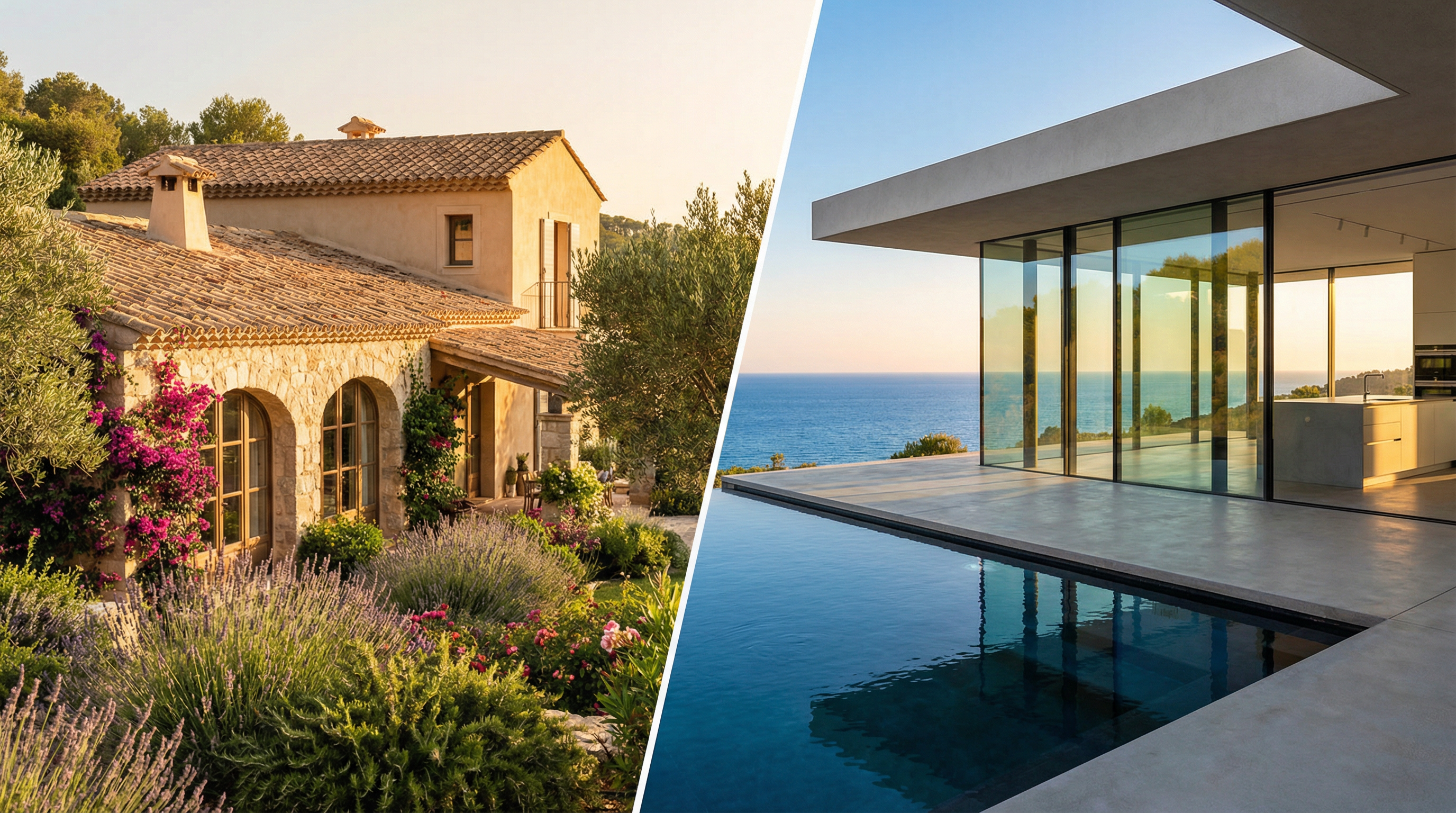
After 15 years advising Costa del Sol property buyers, I've seen homeowners lose €15,000–30,000 in resale value through poor Mediterranean-contemporary integration. The most costly mistake is creating disjointed aesthetics where heavy wrought iron balustrades (typically €150–250 per linear meter) clash directly with minimalist contemporary interiors. When ornate Andalusian tilework costing €80–120 per square meter meets stark modern surfaces without transition elements, buyers perceive the property as confused rather than sophisticated.
Another expensive pitfall involves oversized contemporary windows (€800–1,500 each for premium glazing) that destroy the intimate courtyard character essential to authentic Mediterranean homes. I've witnessed properties where €25,000–40,000 worth of architectural modifications were needed to restore balance after initial poor planning decisions.
How Design Confusion Impacts Your Investment
Properties with poorly blended styles typically sell for 8–12% below comparable well-designed homes in developments like Los Alamos de Marbella or Torreblanca del Sol. When Mediterranean warmth is stripped away through muted contemporary palettes, or when rustic elements overwhelm sleek modern spaces, the result lacks market appeal to both traditional and contemporary buyers.
The practical consequences are equally costly. Mishandled natural light integration—where contemporary expansive glazing conflicts with Mediterranean privacy needs—creates uncomfortable living spaces requiring expensive corrections. Solar control measures for over-glazed contemporary additions typically cost €3,000–8,000 in established Mediterranean properties, while adding authentic courtyards to overly open contemporary layouts runs €15,000–35,000 including landscaping and water features.
Costa del Sol Market Realities for Blended Styles
In Fuengirola and Mijas developments, successful Mediterranean-contemporary fusion commands premium prices of €2,200–2,800 per square meter versus €1,800–2,200 for confused styling. The key difference lies in architectural coherence—properties where one style dominates (typically 70–80%) while the other provides subtle accents consistently outperform arbitrary mix-and-match approaches.
New developments like Higuerón Resort demonstrate successful integration, where contemporary structural systems support Mediterranean aesthetic elements rather than competing with them. These projects achieve sales premiums of 15–25% over properties with competing style elements. Community fees in well-designed blended developments average €120–180 monthly, reflecting higher maintenance standards for cohesive architectural elements.
Local planning regulations in municipalities like Benalmádena and Estepona increasingly favor developments that respect Mediterranean heritage while incorporating contemporary functionality, making poor integration not just aesthetically problematic but potentially regulatory compliant.
Professional Solutions and Next Steps
Successful Mediterranean-contemporary integration requires professional architectural consultation costing €3,000–8,000 for comprehensive design planning, but preventing the €15,000–40,000 correction costs I regularly witness. The investment in proper material selection—such as contemporary interpretations of traditional terracotta at €45–80 per square meter rather than direct style mixing—pays dividends in both functionality and resale value.
Work with architects experienced in Costa del Sol climate requirements and municipal aesthetics guidelines. Properties achieving harmonious style integration through professional planning typically appreciate 3–5% annually above the Málaga province average of 8.2% (INE 2025). For personalized guidance on avoiding these costly design pitfalls while maximizing your Costa del Sol investment potential, Emma can help you understand the specific considerations for your target area and budget range.
Official Sources
- official property classification data - Catastro
- Spanish property transaction records - Colegio Notarial de España
