
AI summary
What investment pitfalls might arise from misjudging the climate for sports? asks for a practical assessment of costs, documents, timing, risk and local Costa del Sol context. For international buyers, this is especially important for new-build homes, financing, legal checks and off-season use.
Practical comparison
| Factor | Why this matters | Control point |
|---|---|---|
| Costs | The purchase price is not the full budget. | Taxes, legal fees, bank, notary, registry and HOA. |
| Legal | Documents determine risk and timing. | Lawyer, permits, title deed and proof of payment. |
| New build | Off-plan purchases require extra checks. | Licence, bank guarantee, payment plan, handover and snagging. |
| Local context | Usage differs by buyer and season. | Flights, family visits, rental rules and quiet months. |
Critical Microclimate Misjudgments Cost Investors €50,000–150,000
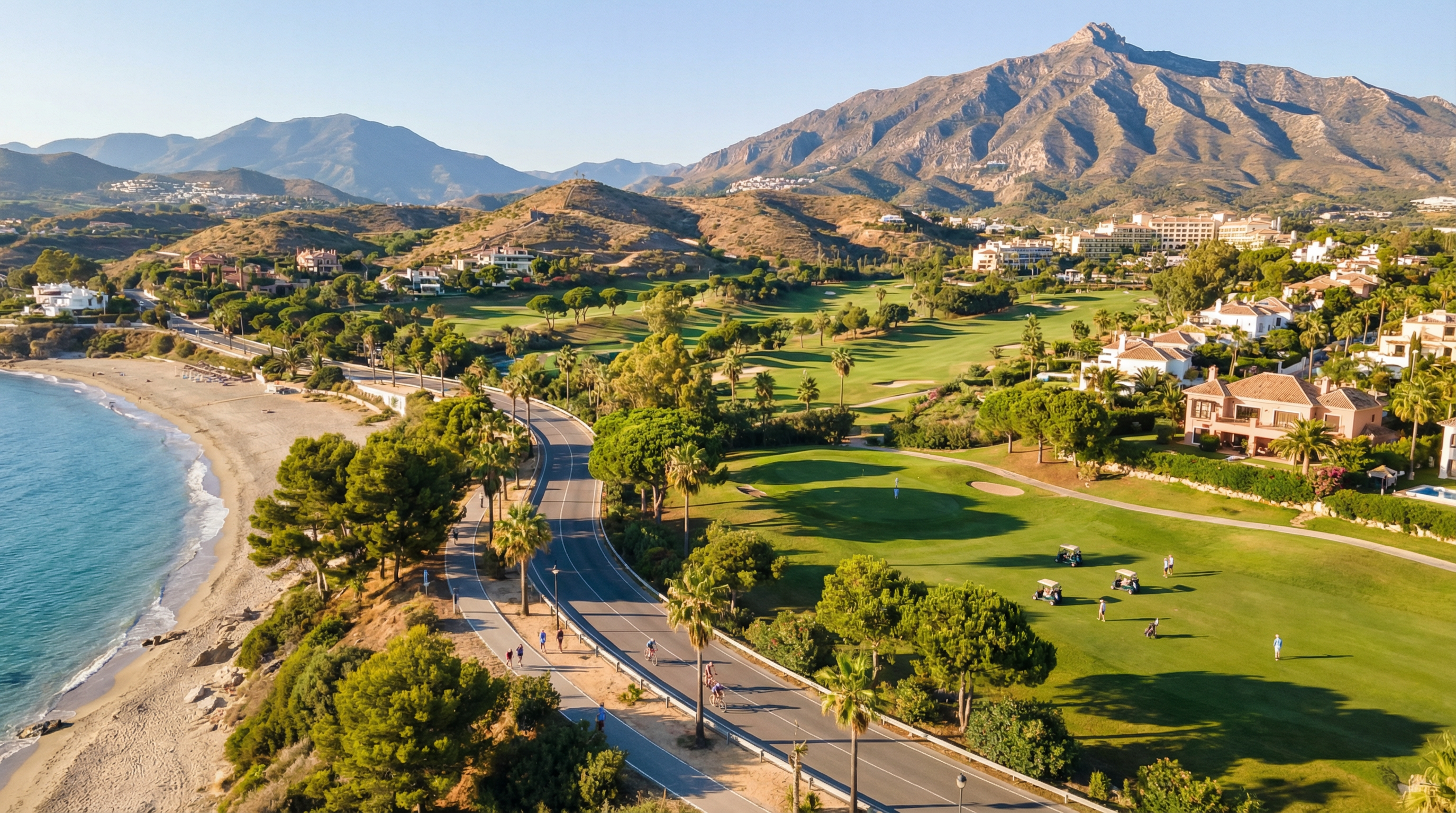
The most expensive pitfall facing sports property investors is underestimating microclimate variations across Costa del Sol's 150km coastline. Properties in Mijas at 200m elevation typically experience 3–5°C cooler temperatures than beachfront Fuengirola, directly impacting year-round sports usability and property values by €50,000–150,000 for comparable properties (INE 2025).
Inland golf properties in areas like Alhaurín de la Torre face morning fog 60–80 days annually, reducing early tee times from November to February. Conversely, coastal Estepona properties experience levante winds exceeding 40km/h on 25–30 days yearly, making cycling and tennis challenging. These microclimatic factors create rental yield variations of 12–18% between optimally and poorly positioned sports properties.
Temperature differentials also affect community fees significantly. Properties requiring heating systems for winter sports comfort face annual community costs of €150–300/month versus €80–150/month for coastal equivalents, directly impacting investment returns over 10–15 year holding periods.
Peak Season Facility Congestion Drives Costs Up 200–400%
Sports facility demand during Costa del Sol's prime seasons (March–May and September–November) creates substantial access and cost barriers investors frequently overlook. Golf course green fees fluctuate from €80–120 in peak season versus €40–60 in summer months, while annual memberships at premium courses like Valderrama or Villa Padierna range €8,000–12,000 (2025 rates).
Padel court booking windows shrink to 2–3 weeks advance notice during peak periods, with hourly rates increasing from €25–35 off-season to €45–65. Tennis facilities experience similar constraints, with private lesson costs rising from €50–70/hour to €80–120/hour when seasonal demand peaks.
This congestion particularly affects rental property appeal. Sports-focused rental properties command premium rates of €150–250/night during optimal climate months but struggle to achieve €80–120/night during less favorable periods, creating cash flow volatility many investors underestimate.
Climate Evolution Threatens Long-term Rental Yields
Gradual climate shifts present the most overlooked long-term investment risk for sports properties. Meteorological data from AEMET shows average July temperatures have increased 1.8°C over the past 20 years in inland Málaga province, reducing summer sports activity windows from 6 hours daily to 4 hours daily during peak heat months.
Rainfall pattern changes affect different sports distinctly. Golf courses now require 15–20% more irrigation during extended dry periods, increasing community maintenance fees by €30–50/month for golf-adjacent properties. Cycling route popularity shifts as traditional summer routes become uncomfortable, affecting property desirability in previously prime locations.
Properties positioned for year-round sports appeal maintain rental yields 15–25% higher than those dependent on specific seasonal conditions. Forward-thinking investors focus on locations with natural wind protection, proximity to climate-controlled facilities, and elevation advantages that provide temperature moderation.
Strategic Sports Property Selection Maximizes Returns
Successful sports property investment requires detailed microclimate analysis and facility access evaluation. Properties within 10 minutes of multiple sports facilities typically command 20–30% rental premiums over single-activity locations, while elevation between 50–150m provides optimal temperature balance without excessive cooling costs.
Consider community amenities carefully: developments with private padel courts, pools, and gymnasiums reduce dependency on external facility availability during peak seasons. Budget €200–400/month for sports facility access when calculating investment returns, as this represents typical owner usage costs excluding property-specific fees.
For personalized sports property investment analysis considering your specific activity preferences and investment timeline, Emma can help identify locations that balance climate advantages with facility access and long-term value appreciation potential.
Official Sources
- Andalusian regional climate data - Junta de Andalucía
- official Spanish meteorological records - Agencia Estatal de Meteorología
