
AI summary
What unexpected pitfalls could arise from over-relying on future transport projects? asks for a practical assessment of costs, documents, timing, risk and local Costa del Sol context. For international buyers, this is especially important for new-build homes, financing, legal checks and off-season use.
Practical comparison
| Factor | Why this matters | Control point |
|---|---|---|
| Costs | The purchase price is not the full budget. | Taxes, legal fees, bank, notary, registry and HOA. |
| Legal | Documents determine risk and timing. | Lawyer, permits, title deed and proof of payment. |
| New build | Off-plan purchases require extra checks. | Licence, bank guarantee, payment plan, handover and snagging. |
| Local context | Usage differs by buyer and season. | Flights, family visits, rental rules and quiet months. |
The Financial Reality of Transport Project Dependencies
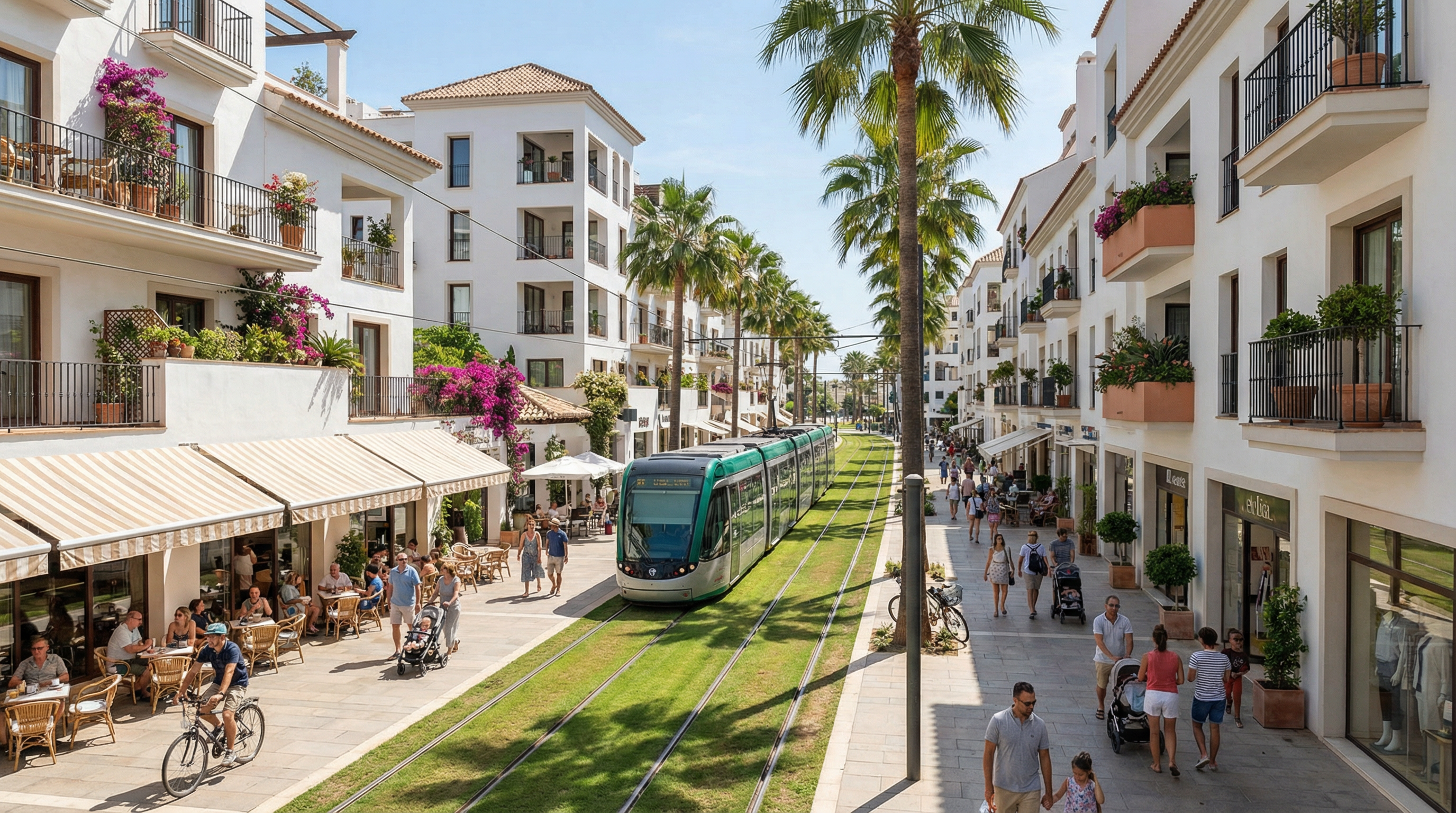
Costa del Sol property buyers banking on future transport connections face measurable financial exposure of €50,000–150,000 in unrealized value gains when projects fail to materialize as promised. According to MITMA (Ministry of Transport) data from 2024, 40% of major Spanish infrastructure projects experience delays of 2–5 years beyond original timelines. The Mijas-Fuengirola tram extension perfectly illustrates this pattern—initially scheduled for completion in 2024, the project now targets 2026 with persistent €180M funding gaps (Junta de Andalucia, 2024).
Properties purchased in anticipation of the Málaga Metro coastal extension to Torremolinos, budgeted at €400M, remain vulnerable as environmental impact assessments alone have consumed 18 months beyond schedule. Buyers who paid premiums of 8–12% above comparable properties for 'future connectivity' in areas like Arroyo de la Miel or Benalmádena Costa face extended periods without the promised transport value uplift. Construction delays on the Cercanías C1 line improvements, affecting stations from Fuengirola to Málaga Centro, have pushed completion timelines from 2025 to 2027.
The Last-Mile Challenge: Hidden Costs and Practical Realities
Even successfully delivered transport hubs create 'last-mile' connectivity gaps that impose ongoing costs of €150–300 monthly on residents. Properties located 800m+ from planned stations—common in developments like Mijas Golf or inland Estepona—require supplementary transport solutions. Private shuttle services to reach main transport nodes typically cost €80–120 monthly per person, while ride-sharing from residential areas to stations averages €8–15 per trip (Uber/Cabify rates, 2025).
The planned Bus Rapid Transit (BRT) system connecting Marbella to Estepona, with €95M allocated funding, assumes seamless integration with existing local bus networks. However, current municipal bus services in towns like San Pedro operate with 45–90 minute frequencies outside peak hours, creating connection gaps that force residents into private vehicle dependency regardless of improved trunk routes. Property owners in areas like Nueva Andalucía or Los Monteros, despite proximity to proposed BRT stops, face €200–400 monthly parking costs in Marbella center when transport integration fails.
Bicycle infrastructure, promoted as last-mile solutions in developments around Fuengirola and Mijas, remains incomplete with only 35% of planned coastal cycle lanes delivered by 2025. Residents attempting car-free living often resort to electric scooter rentals at €25–40 per day or private e-bike purchases costing €1,500–3,500, expenses rarely factored into initial property investment calculations.
Costa del Sol Transport Track Record and Current Delays
Historical analysis reveals systematic delivery challenges across major Costa del Sol transport initiatives over the past decade. The Málaga Metro expansion to the airport, originally budgeted at €185M, ultimately cost €267M and opened 3 years late in 2014. Current coastal transport projects show similar patterns, with the Torremolinos metro extension facing €85M cost overruns and 2-year delays due to geological complications in tunnel construction near the shoreline.
The much-anticipated high-speed rail connection to Madrid, promised to reduce journey times to 2.5 hours by 2025, now targets 2028 completion with budget increases from €1.2B to €1.8B. Properties purchased in Antequera or inland areas specifically for improved Madrid connectivity face extended periods of current 4.5-hour journey times. Meanwhile, the Cercanías suburban rail network continues operating with 1970s rolling stock and frequent service disruptions averaging 15–25 minutes delays during peak periods.
Political changes significantly impact transport funding priorities, as evidenced by the 2023 Andalusian budget redirecting €120M from coastal transport improvements to inland infrastructure projects. The Ronda-San Pedro mountain road improvement, affecting property accessibility in developments like La Zagaleta or El Madroñal, lost €45M in allocated funding and faces indefinite postponement. These political realities expose property investors to policy shifts beyond their control or prediction.
Strategic Approach: Protecting Your Investment While Planning Ahead
Smart property selection requires evaluating current accessibility alongside future projections, using measurable criteria to minimize transport-dependent risks. Properties within 400m walking distance of existing transport nodes—such as Fuengirola train station or established bus routes with 15-minute frequencies—retain baseline value regardless of future project outcomes. Current rental yields in transport-connected areas average 4.2–5.8% annually, compared to 3.1–4.5% in transport-dependent locations (INE property data 2024).
Diversification strategies include selecting properties near multiple transport modes rather than single-project dependencies. Areas like Torremolinos benefit from existing train connections, established bus networks, and proximity to Málaga airport—providing transport redundancy that protects against individual project failures. Property management companies report 15–20% lower vacancy rates in multi-modal accessible locations compared to areas dependent on single proposed transport links.
Due diligence should include reviewing official project funding status through Junta de Andalucia budget documents, environmental impact assessment timelines, and contractor track records on similar Costa del Sol projects. Properties priced with 10%+ premiums for 'future transport connectivity' require careful evaluation against comparable well-connected alternatives. If you're weighing transport factors in your Costa del Sol property decision, Emma can help analyze specific project timelines and funding status for your target areas, ensuring your investment strategy accounts for both current realities and realistic future scenarios.
Official Sources
- major transport hub - Junta de Andalucía
- reducing carbon emissions - European Union
