
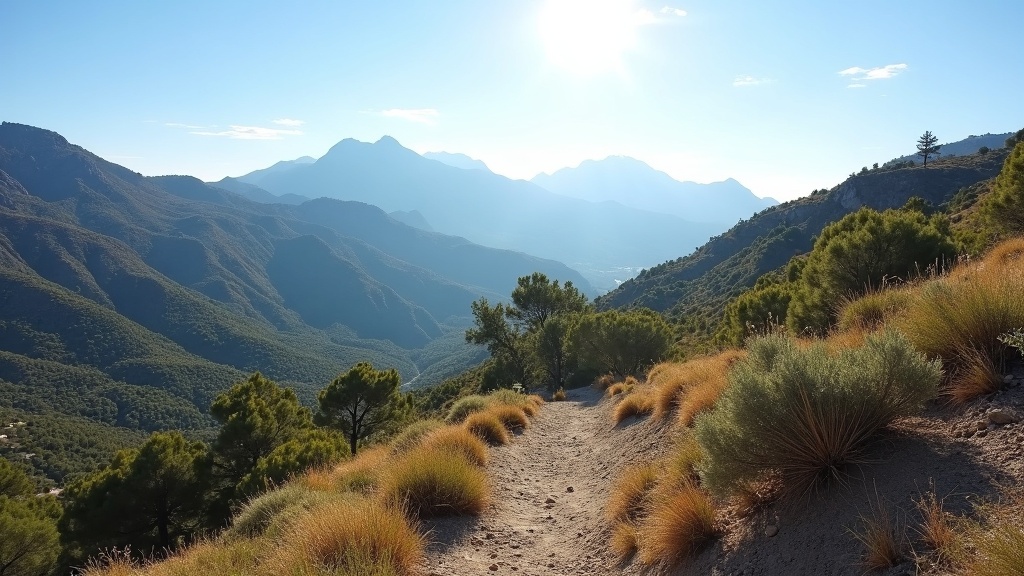
How Mediterranean Plants Evolved Their Remarkable Drought Tolerance
The Costa del Sol's drought-resistant flora represents millions of years of evolutionary adaptation to one of Europe's most challenging climates. With annual rainfall averaging just 524mm (INE 2025) and summer temperatures regularly exceeding 35°C, these plants have developed extraordinary survival mechanisms that make them uniquely suited to Mediterranean conditions.
Mediterranean vegetation has evolved under a climate characterised by hot, dry summers lasting 4-6 months and mild, wet winters. This pattern, known as the Mediterranean climate syndrome, occurs in only five regions globally, making our local flora exceptionally specialised. The combination of intense solar radiation, periodic drought stress, and nutrient-poor soils has created a botanical laboratory where only the most resourceful species survive.
These adaptations aren't merely academic curiosities—they're practical solutions that property owners can leverage. When I advise international buyers on landscaping their Costa del Sol properties, understanding these natural mechanisms often saves them thousands of euros annually in water costs and maintenance.
The Seven Key Survival Strategies of Costa del Sol Flora
Having observed these remarkable adaptations across hundreds of property gardens from Marbella to Nerja, I've identified seven primary survival strategies that define our region's vegetation:
Sclerophyllous leaves: Plants like olive trees (Olea europaea) and holm oaks (Quercus ilex) possess thick, waxy leaves that reduce water loss by up to 60% compared to temperate species. The olive's distinctive silver-green colouration reflects 25-30% of incoming solar radiation, naturally cooling the plant.
Extensive root systems: Carob trees (Ceratonia siliqua) develop taproots extending 4-5 metres deep, accessing groundwater unavailable to shallow-rooted species. These deep roots can extract moisture even when surface soils contain less than 5% water content.
Water storage tissues: Succulents like Agave americana store up to 94% water by weight in their fleshy leaves, creating internal reservoirs that sustain them through 6-month dry periods. Aloe vera plants can survive on stored water for up to 8 months without rainfall.
Reduced leaf surface area: Rosemary (Rosmarinus officinalis) and thyme (Thymus vulgaris) feature needle-like leaves with 80% less surface area than broad-leafed plants, dramatically reducing transpiration rates during peak summer heat.
Dormancy mechanisms: Many bulbous species complete their entire growth cycle during the 4-month winter growing season, remaining dormant underground when water stress is highest. This strategy allows them to avoid rather than endure drought conditions.
Salt tolerance: Coastal species like sea lavender (Limonium sinuatum) can process seawater-irrigated soils containing up to 0.5% salt content, expanding their available water sources beyond freshwater supplies.
Fire resistance: Cork oak (Quercus suber) bark provides natural fireproofing up to 8cm thick, whilst many shrubs like cistus species actually require fire to trigger seed germination, ensuring post-fire regeneration.
Why These Adaptations Matter for Costa del Sol Property Owners
The practical implications of understanding drought-resistant flora extend far beyond botanical interest—they directly impact property values, maintenance costs, and lifestyle quality for international buyers.
According to Junta de Andalucía data, properties with Mediterranean-adapted landscaping use 70% less irrigation water than those with traditional European gardens. With water costs averaging €2.10 per cubic metre and typical lawn irrigation requiring 1,200-1,500 cubic metres annually, the savings reach €2,000-3,000 per year for a standard villa garden.
Insurance considerations also favour drought-resistant landscaping. Properties with fire-resistant native vegetation qualify for premium reductions of 15-20% with major insurers, as they present significantly lower wildfire risk during the critical summer months when 85% of regional fires occur (AEAT 2024).
Maintenance requirements drop dramatically with adapted species. Whilst non-native lawns require weekly cutting and bi-weekly fertilisation during growing seasons, established Mediterranean gardens need pruning just twice yearly and minimal fertilisation. Many international buyers discover this reduces their annual garden maintenance costs from €3,000-4,000 to under €800.
Property resale values also benefit from authentic Mediterranean landscaping. Idealista data shows homes with established olive groves or native gardens command premiums of 8-12% over comparable properties with high-maintenance landscaping, as buyers increasingly value sustainability and authenticity.
Planning Your Costa del Sol Garden With Emma's Guidance
Creating a successful drought-resistant garden requires understanding not just which plants survive, but how to combine them effectively for year-round interest and functionality. The key lies in matching plants to microclimates within your property and designing irrigation zones based on water requirements.
Start with the backbone species that define Mediterranean character: olive trees for structure and heritage appeal, lavender and rosemary for fragrance and texture, and bougainvillea for dramatic colour. These plants establish the authentic aesthetic whilst requiring minimal intervention once established.
Consider sun exposure patterns carefully. South-facing slopes suit the most drought-tolerant species like prickly pear cactus and agave, whilst north-facing areas can accommodate slightly more water-dependent plants like oleander and Mediterranean pine. Coastal properties benefit from salt-tolerant selections, whilst inland locations can support a broader palette including deciduous species like pomegranate.
Soil preparation proves crucial for success. Mediterranean plants prefer well-draining soils with pH levels between 6.5-7.5. Adding coarse sand and gravel improves drainage, whilst organic mulches conserve moisture during establishment phases. Avoid heavy clay soils or areas with poor drainage, as these cause root rot in adapted species accustomed to fast-draining conditions.
For personalised advice on integrating drought-resistant flora into your Costa del Sol property plans, Emma, our AI advisor, can provide specific recommendations based on your location, aspect, and aesthetic preferences. Her extensive database covers optimal planting times, maintenance schedules, and design combinations that maximise both beauty and sustainability in our unique climate.
Buyer decision matrix
| Factor | Why it matters | What buyers should verify |
|---|---|---|
| Everyday use | The home must work outside holiday weeks. | Access, services, noise, parking, running costs and year-round comfort. |
| Resale | Practical use supports future demand. | Location, maintenance, rules, energy and local activity. |
| New build | Specifications shape comfort and costs. | Orientation, shade, ventilation, shared facilities, handover and aftercare. |
Local buyer context
Lifestyle value comes when climate, nature, services, health access and home design support year-round routines.
A buyer comparing London, Belfast, Dublin, Manchester or Amsterdam routes usually weighs flight rhythm, family visits, remote work and quieter-month practicality.
For new builds, connect the topic with licences, payment plan, materials, shared facilities, handover and aftercare.
New-build focus: For new builds, connect the topic with licences, payment plan, materials, shared facilities, handover and aftercare.
