
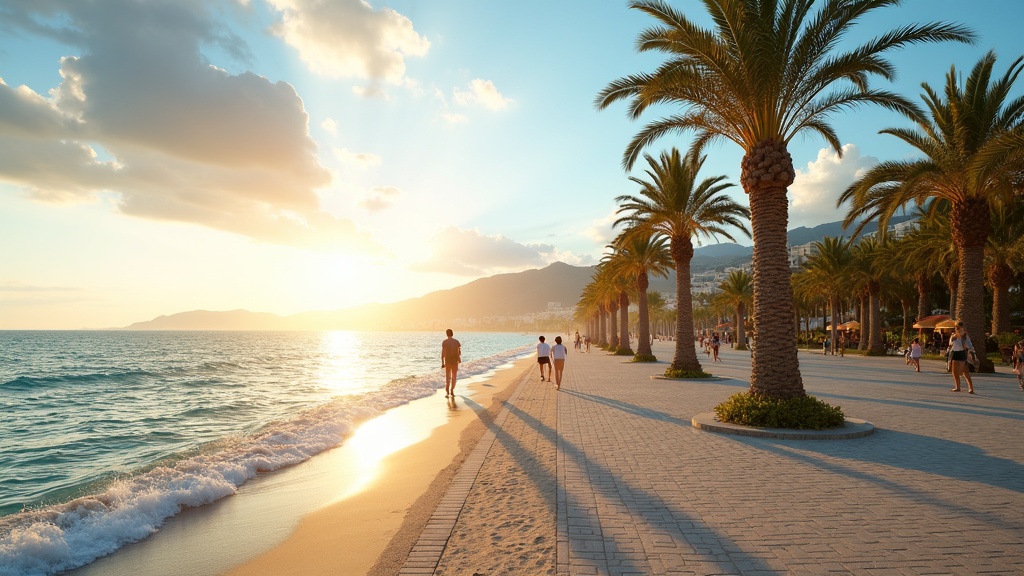
What Makes Costa del Sol's Microclimate So Exceptional?
Costa del Sol's remarkable climate isn't coincidental—it's the perfect convergence of geographical and meteorological factors. Over my 15+ years helping international families find their dream homes here, from Marbella to Estepona to Mijas, I've often explained how nature has been extraordinarily generous to this coastline. My Northern European clients are frequently amazed that we can still enjoy sunshine in mid-December when their homelands are already experiencing snow or dark, wet conditions. This is entirely down to Costa del Sol's unique microclimate.
The region benefits from natural protection provided by the Andalusian mountain ranges—Sierra Nevada, Sierra de las Nieves, and others—which act as a natural barrier against cold northern winds and Atlantic precipitation. According to official Spanish meteorological records (AEMET), this creates a "rain shadow" effect where most moisture and cool air remains on the northern side of the mountains. Meanwhile, the Mediterranean Sea acts as a massive heat reservoir, warming during summer and slowly releasing this warmth throughout autumn and winter, maintaining pleasant temperatures year-round.
Sierra Nevada to the east serves as Europe's southernmost ski resort while simultaneously being a crucial climate modifier for Costa del Sol. Its high peaks retain cold air masses, while Sierra de las Nieves (now a national park) above Marbella provides critical protection for coastal towns like Marbella and Estepona from northern cold currents, keeping temperatures mild even in winter. This mountain protection results in significantly lower rainfall at sea level compared to inland areas—we often say "it rains here, but rarely," and even then, showers are typically brief and intense, followed by the sun's swift return.
Health and Wellbeing Benefits for International Buyers
Over 320 sunny days annually isn't merely comfort—it delivers significant health benefits that are particularly important for my clientele, who often prioritise wellness and active lifestyles. I've witnessed firsthand how just a few months' residence on Costa del Sol can transform someone's appearance and demeanour—skin glows, minds sharpen, and bodies feel revitalised.
For Northern Europeans, vitamin D deficiency challenges following long, dark winters are well-known. Vitamin D is essential for bone health, immune system function, and mood regulation. On Costa del Sol, this "sunshine vitamin" is naturally and abundantly available. When skin is exposed to sunlight, it produces vitamin D naturally. Here, you can confidently spend time outdoors year-round, ensuring adequate vitamin D levels simply by enjoying outdoor activities. Sufficient sunlight exposure is linked to improved mood and reduced seasonal depression risk—I've often seen my clients return after winter with their "home" smiles, clearly refreshed and energised.
The pleasant climate throughout most of the year makes outdoor activities and hobbies a natural part of daily life. This proximity to golf courses and coastal areas is crucial for many of my clients. Golfers can enjoy their sport year-round, dressing lightly even in December—Costa del Sol is called the "Golf Coast" for good reason. Beach walks, cycling along the coast, and various water sports are possible during months when northern countries offer only indoor pools as options. This keeps both body and mind active. Outdoor time and activities increase social interaction and community engagement, which is vital especially for retirees and those seeking new communities abroad.
Understanding Microclimates for Property Investment
When discussing Costa del Sol with clients, the term "microclimate" frequently arises. It doesn't just mean sunny days, but understanding small regional variations. While the entire area is sunny, there can be significant differences between Marbella, Estepona, or Málaga's climate. I've seen properties just kilometres apart with markedly different atmospheric conditions or humidity levels.
Marbella and Puerto Banús are perhaps best known for their excellent microclimate, protected by the Sierra Blanca mountains. Here, summers are slightly drier and winters milder than many other areas. Often in winter, when it's raining elsewhere, Marbella might be cloudy with light drizzle, but air temperatures remain pleasant. Estepona, slightly further west, also offers excellent climate, though it may be somewhat more exposed to westerly winds. However, Estepona's area is known as "El Jardín de la Costa del Sol" (The Garden of Costa del Sol) and tends to be greener and slightly more humid than central Marbella, partly due to local waterways and less dense building allowing trees and plants to thrive.
The eastern areas of Fuengirola and Benalmádena, being more densely populated, can be slightly warmer and more humid during summer months than Marbella and Estepona areas, though they still enjoy excellent climate and abundant sunshine. Proximity to seawater and wind direction significantly affect property comfort. I've often noted my clients appreciate properties close enough to the sea for sea breezes to cool, but not directly on open beaches where winter winds can be biting. Just a few kilometres' shift inland from the coast can mean summers are hotter and winters slightly colder, as the coastal influence brings the cooling effect of sea breezes.
Climate's Impact on Property Values and Investment Returns
Costa del Sol's climate doesn't just make living more pleasant—it directly affects property values and maintenance costs. This is often a consideration my Northern European clients ponder, accustomed to entirely different building standards and maintenance expenses in their home countries. I've helped many understand how Costa del Sol property investment can be both dream fulfilment and wise financial decision, partly thanks to the climate.
One of the most obvious advantages is the region's high rental potential. When people can enjoy sunshine almost year-round, the holiday season extends significantly. Costa del Sol's sunny, mild climate attracts tourists, especially from Northern Europe, throughout the year. This means your property can generate rental income longer than traditional summer destinations. We've observed that the winter season from November to March is as popular as summer months for certain demographic groups. Continuous demand, for both holiday homes and more permanent residences, makes Costa del Sol a stable investment in property markets.
Unlike our home countries where heating costs are enormous and buildings must withstand major temperature fluctuations, Costa del Sol property maintenance costs can be a positive surprise. Heating in Spain is generally cheaper because there's less heating season required. Although winters are cooler, often only heat pumps or electric heating for a few hours daily are needed to keep homes comfortable. Traditional central heating systems aren't found the same way as in Northern Europe. Mild conditions, less frost, and minimal snowfall preserve property exteriors, roofs, and gardens, potentially meaning fewer and lighter repair needs compared to countries with harsher weather conditions.
While swimming pools require regular maintenance, heated pools are popular here too. With a heated swimming pool, you can enjoy swimming almost year-round, increasing property attractiveness in rental markets. However, gardens do require year-round attention—many of our clients employ gardeners on monthly contracts to maintain their outdoor spaces.
If you're considering making Costa del Sol your home or investment destination, our team at Del Sol Prime Homes, along with our AI advisor Emma, can help guide you through every aspect of the process. From understanding these crucial microclimatic differences to navigating the Spanish property purchase process, we're here to ensure your move to paradise is as smooth as the 320 days of annual sunshine you'll be enjoying.
Buyer decision matrix
| Factor | Why it matters | What buyers should verify |
|---|---|---|
| Daily access | The home must work outside holiday weeks. | Airport, shops, beach, healthcare, parking and noise. |
| Micro-location | Two homes in one town can feel very different. | Sun, views, walking routes, privacy and services. |
| Resale | Practical use supports future demand. | Access, maintenance, rules, energy and local activity. |
Local buyer context
Location must work in everyday life: access, noise, services, parking, transport and resale all matter.
A buyer comparing London, Belfast, Dublin, Manchester or Amsterdam routes usually weighs flight rhythm, family visits, remote work and quieter-month practicality.
For new builds, connect the topic with licences, payment plan, materials, shared facilities, handover and aftercare.
New-build focus: For new builds, connect the topic with licences, payment plan, materials, shared facilities, handover and aftercare.
