
What defines the Mediterranean climate on Costa del Sol?
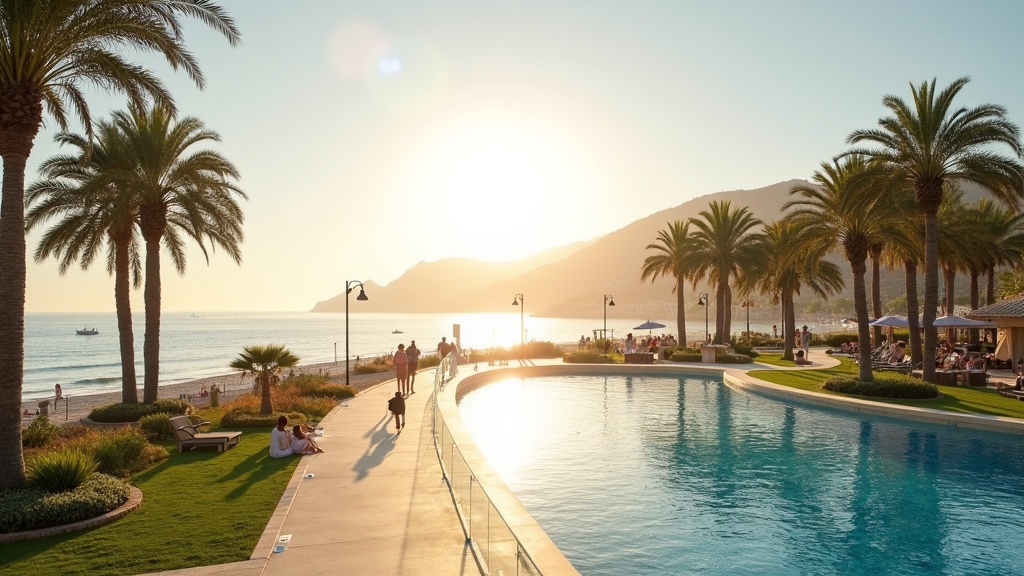
The Costa del Sol enjoys one of Europe's most distinctive Mediterranean climates, characterised by approximately 320 sunshine days per year (AEMET 2025), mild wet winters rarely dropping below 10°C, and hot dry summers frequently exceeding 30°C. This exceptional climate pattern creates the perfect conditions for the region's remarkable biodiversity.
As someone who has spent over 15 years helping international buyers discover their perfect Costa del Sol property, I witness daily how profoundly this climate shapes everything from architectural choices to garden design. The pronounced seasonal contrast—dry summers and wet winters—creates a natural rhythm that both residents and wildlife have adapted to over millennia. The proximity to the Mediterranean Sea moderates temperature extremes, whilst the Levante (easterly) and Poniente (westerly) winds influence humidity levels and create microclimates across the coastline.
This climate pattern concentrates rainfall between October and May, when the region receives approximately 85% of its annual precipitation of 500-600mm (Junta de Andalucía 2025). The summer months from June to September are characteristically dry, with some areas receiving less than 20mm of rainfall during this entire period. These conditions have created evolutionary pressures that have shaped both flora and fauna into remarkably adapted specialists.
How do plants survive extreme seasonal variations?
The flora of Costa del Sol represents a masterclass in climate adaptation, having evolved sophisticated survival strategies over thousands of years. These adaptations are not merely botanical curiosities—they're practical lessons that inform sustainable landscaping practices for modern property developments along the coast.
Sclerophylly is perhaps the most visible adaptation, where plants like cork oak (Quercus suber) and European olive (Olea europaea) develop thick, leathery leaves with waxy coatings to minimise water loss. Their sunken stomata and reduced leaf surface area can decrease water loss by up to 60% compared to temperate species (CSIC Botanical Research 2024). Many shrubs in the maquis, including mastic (Pistacia lentiscus) and strawberry tree (Arbutus unedo), employ similar strategies.
Root system adaptations are equally remarkable. Mediterranean pines can extend tap roots down 15-20 metres to access groundwater, whilst their lateral root systems can spread up to 30 metres horizontally. Olive trees, some over 500 years old in Andalusia's groves, have developed root networks that can survive months without surface water by tapping into deep soil moisture reserves.
Water storage mechanisms appear in succulent species like century plants (Agave americana) and various aloe species, which can store up to 95% water content in their tissues. These plants can survive 6-8 months without rainfall by gradually metabolising stored water. Annual species adopt a different strategy entirely, completing their entire life cycle during the wet season—germinating with autumn rains, flowering in winter and spring, then producing drought-resistant seeds that remain dormant through summer.
What wildlife thrives in Costa del Sol's Mediterranean ecosystem?
The Costa del Sol's position on the Mediterranean flyway makes it a critical biodiversity hotspot, supporting both resident species and serving as a vital stopover for millions of migratory birds. This biological richness is directly attributable to the climate's seasonal patterns, which provide varied resources throughout the year.
Avian diversity is exceptional, with over 350 recorded species (SEO/BirdLife Andalusia 2024). The autumn migration sees spectacular flocks of white storks, honey buzzards, and booted eagles crossing the Strait of Gibraltar. Wetland areas like the Guadalhorce River mouth host flamingo populations exceeding 2,000 individuals during peak season, whilst the coastal lagoons support purple herons, little egrets, and various duck species. Resident raptors include Bonelli's eagles in the mountain areas and peregrine falcons nesting on coastal cliffs.
Mammalian fauna has adapted to the climate's water scarcity through behavioural modifications. Spanish ibex (Capra pyrenaica) populations in the Sierra Blanca have developed the ability to metabolise moisture from vegetation so efficiently they rarely need to drink directly. Wild boar populations, numbering approximately 8,000 across the Costa del Sol provinces (SEPRONA 2024), concentrate their activity during cooler dawn and dusk hours. Smaller mammals like the Iberian hare and various bat species have evolved sophisticated water conservation mechanisms.
Reptilian diversity flourishes in the dry conditions, with over 20 species of lizards and 12 snake species recorded. The large psammodromus (Psammodromus algirus) can survive losing up to 25% of its body weight in water—a remarkable adaptation to summer drought conditions. Marine ecosystems remain productive year-round, with the Alboran Sea's upwelling patterns supporting diverse fish populations that attract loggerhead turtles and occasional dolphin pods.
How should property buyers consider climate impact on landscapes?
For international buyers considering Costa del Sol property, understanding these climate-driven ecosystems isn't merely academic—it directly impacts property values, maintenance costs, and lifestyle quality. Properties that work with rather than against these natural patterns consistently outperform those that ignore them.
Climate-conscious landscaping can reduce water consumption by 40-70% compared to traditional northern European garden designs. Native plant selections like lavender (Lavandula stoechas), rosemary (Rosmarinus officinalis), and Spanish broom (Spartium junceum) require minimal irrigation once established, typically needing water only 2-3 times monthly during peak summer. Mature olive trees can increase property values by €2,000-5,000 each whilst requiring virtually no supplemental watering.
However, climate change is introducing new variables. Average temperatures have increased by 1.2°C since 1980 (AEMET Climate Change Report 2024), whilst rainfall patterns are becoming more erratic. The 2022-2023 drought saw reservoir levels drop to 28% of capacity, leading to watering restrictions that affected property maintenance costs. Forward-thinking developers now incorporate drought-resistant landscaping and water recycling systems as standard features.
Emma, our AI property advisor, can provide specific guidance on how climate considerations affect property choice, from orientation for natural cooling to garden design for water efficiency. These factors are becoming increasingly important as environmental consciousness grows among international buyers and climate adaptation becomes essential for long-term property value protection. The properties that best harmonise with Costa del Sol's Mediterranean climate patterns consistently deliver the strongest returns and the most satisfying ownership experience.
Buyer decision matrix
| Factor | Why it matters | What buyers should verify |
|---|---|---|
| Documents | Wrong sequencing can delay the purchase. | NIE, lawyer, bank account, tax budget and payment evidence. |
| Costs | The asking price is not the full budget. | Taxes, notary, registry, lawyer, bank, insurance and community fees. |
| New build | Off-plan payments need protection. | Licence stage, bank guarantees, payment plan and handover terms. |
Local buyer context
A safe buying decision connects documents, banking, tax, legal review and local practice before reservation.
A buyer comparing London, Belfast, Dublin, Manchester or Amsterdam routes usually weighs flight rhythm, family visits, remote work and quieter-month practicality.
For new builds, connect the topic with licences, payment plan, materials, shared facilities, handover and aftercare.
New-build focus: For new builds, connect the topic with licences, payment plan, materials, shared facilities, handover and aftercare.
