
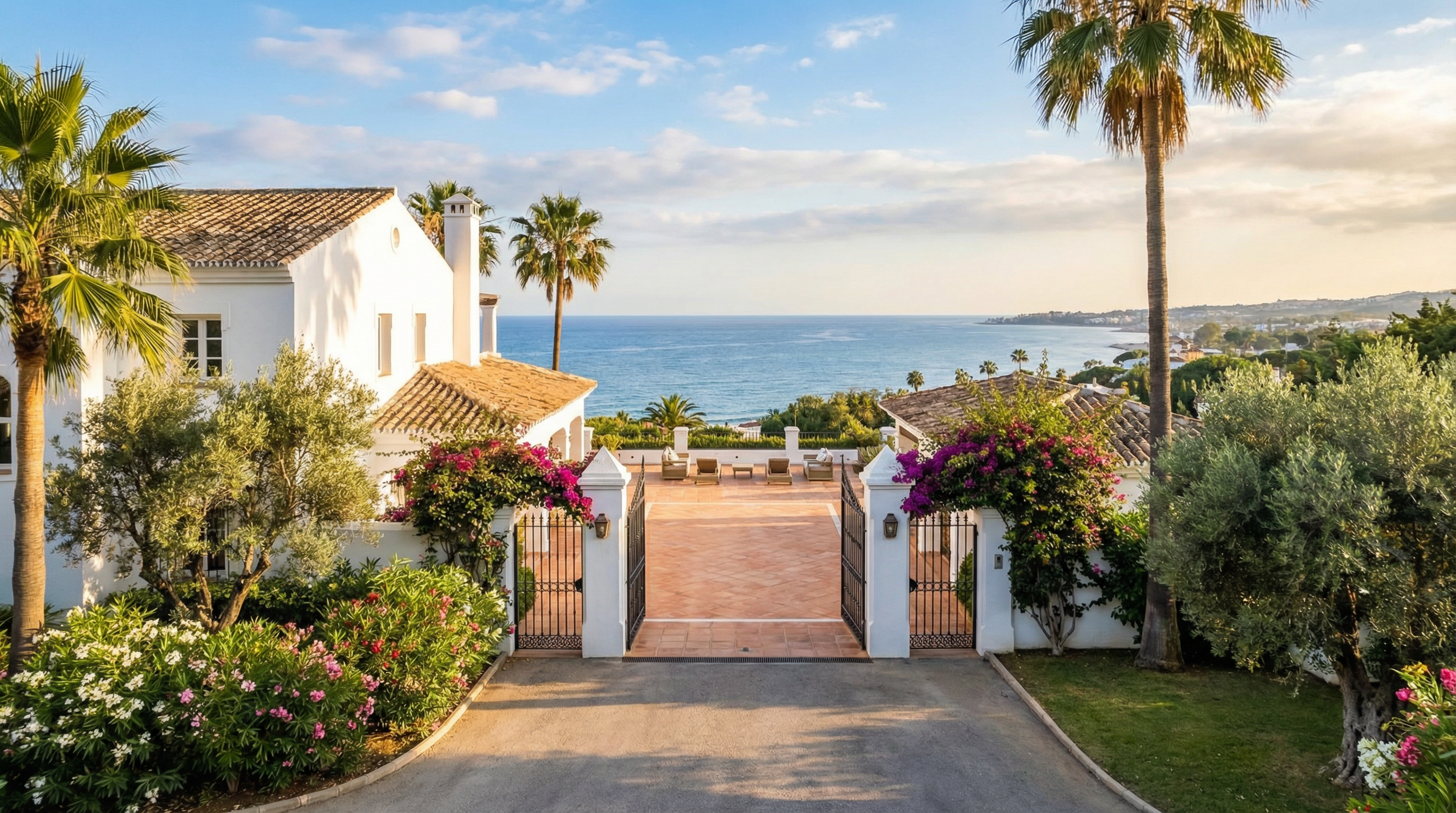
We’ve guided more than 500 international families through purchases from Marbella to Estepona, and one truth never changes: legal certainty is everything. In Spain, it’s not enough to “like the property.” You need documentary proof that the home is legal, debt-free, and exactly what’s being sold. In 2026, with tighter compliance and faster digital checks, a disciplined due diligence approach turns a good purchase into a great one.
What does “legal certainty” mean when buying in Spain?
Legal certainty means your ownership, use rights, and financial obligations are clear, verified, and enforceable. In Spain, that clarity flows from several pillars: the Property Registry (Registro de la Propiedad), Cadastral records (Catastro), the town hall’s planning files, and a properly executed notarial deed. Each must align before you transfer funds or sign.
Thewho owns what and lists charges or liens. The Cadastre confirms physical data used for taxation.The town hall provides planning and occupancy records. The, capacity, and tax compliance on the day of completion—but does not replace a lawyer’s full due diligence on planning or hidden liabilities .
Why this matters on the Costa del Sol
From frontline beach apartments in Marbella to cortijos in Mijas, each asset class carries specific legal checks. We’ve seen buyers fall for views and forget paperwork. With the right process, you’ll sleep well knowing the title, planning status, and utilities are all in order—and resale liquidity is protected.
- Stronger resale value and easier financing
- Confidence to rent legally where permitted
- No post-completion surprises from town halls or communities
Is buying property in Spain safe in 2026?
Yes—if you respect the Spanish system. Spain’s land registry and notarial network are robust and digitalized, and Andalucía’s tax framework for property purchases is stable: most resales attract a flat 7% transfer tax (ITP) and new builds pay VAT plus stamp duty (AJD), typically 1.2% in Andalucía .
Off-plan buyers benefit from mandatory bank guarantees securing stage payments under current regulations . Anti-money laundering checks require proof of funds and source, which protects the integrity of transactions . With an independent lawyer and a clear checklist, risk is low and predictable.
When buyers get into trouble
In our experience, issues arise when buyers skip planning checks or sign reservation contracts without lawyer review. We helped a Dutch client avoid a costly mistake in Benalmádena when a seemingly perfect villa lacked a valid first occupancy license—solved after the seller completed compliance works before we proceeded.
- Never sign or pay without a lawyer’s green light
- Match the physical home to the legal description
- Confirm utilities, community approvals, and rental rules
Key benefits of prioritizing legal certainty
Legal certainty is not bureaucracy—it’s your value engine. It reduces total risk, protects capital, and keeps your exit strategy flexible. If you rely solely on the notary or the agent’s word, you may inherit someone else’s problem.
We build a compliance dossier for each purchase, which you can also use later for mortgage refinancing, tourist rental registration, or a swift resale. Spanish lenders value clean, verifiable files; the better your paperwork, the better your financing options .
Tangible advantages we see every week
Proper due diligence achieves three things: security, leverage, and speed. Sellers respect organized buyers. More than once, we’ve negotiated a price reduction or a retention at completion when our checks surfaced pending administrative items.
- Lower legal risk, higher negotiating power
- Faster bank approvals and insurer sign-offs
- Smoother resale thanks to a “clean file”
Your step-by-step due diligence process (Costa del Sol)
Here’s the framework we use across Marbella, Estepona, Fuengirola, Benalmádena, and Mijas. It’s rigorous, but it’s how you buy confidently in Spain’s top coastal market.
Before you start, secure your NIE (foreigner tax number) and open a Spanish bank account for completion funds . If financing, obtain a mortgage pre-approval early to avoid delays .
1) Title, charges, and identity checks
Order an up-to-date Nota Simple from the Property Registry and match it to the sellers’ IDs and deed. Confirm ownership, boundaries, and any charges such as mortgages or embargoes .
- Ensure all sellers listed will sign the deed
- Plan to cancel or subrogate any existing mortgage
2) Cadastral and physical match
Compare the property’s registry description with Catastro data and the physical reality. Differences are common and often solvable, but they must be identified before signing .
- Measure terraces, basements, and outbuildings
- Correct mismatches via plans or deed rectification
3) Planning and occupancy status
Request town hall certificates, including planning compliance and the first occupancy license (LPO). For older or rural homes, your lawyer should assess AFO (Asimilado a Fuera de Ordenación) eligibility under Andalusian regulations .
- No LPO? Negotiate conditions or walk away
- Beware recently enclosed terraces or added rooms
4) Community of owners and building health
Obtain the community certificate stating no outstanding debts, review minutes for special assessments, and check insurance and building reports. Ask specifically about façade, lift, pool, and garage works .
- Confirm approved budgets and pending projects
- Review statutes on short-term rentals and alterations
5) Utilities, habitability, and EPC
Verify current utility supplies, compliance with habitability standards, and the Energy Performance Certificate (EPC), which is mandatory to sell .
- Request last utility bills and supply contracts
- Check potable water, drainage, and electrical capacity
6) Taxes, costs, and fiscal review
For resales in Andalucía, budget 7% ITP, notary and registry fees, and your lawyer’s fee. For new builds, budget 10% VAT on residential units plus AJD (commonly 1.2%) and connection fees . Clarify who pays municipal plusvalía per the contract and local rules .
- Model payments via a completion statement
- Confirm seller is current on IBI and rubbish taxes
7) Contract strategy and deposits
Have your lawyer draft or amend the reservation and private contract (arras). Arras penitenciales allow either side to withdraw with defined penalties—under Spanish Civil Code Article 1454 .
- Make deposits refundable if key documents fail
- Use escrow or a regulated client account for funds
8) Off-plan buyer protections
For new build, confirm the building license, technical project, and developer’s bank guarantees for every payment. Stage payments should be covered until the LPO is granted .
- Demand guarantee certificates referencing your unit
- Tie payments to construction milestones
9) Notary day and registration
On completion, the notary verifies identities, taxes, and mortgage cancellation or subrogation. Funds are released via bank cheque or secure transfer. After signing, the deed is lodged for registration and you receive keys .
- Arrange a power of attorney if you cannot attend
- Track registration until you receive the updated title
10) Post-completion essentials
Switch utilities, set up direct debits for IBI/community fees, and register for tourist rentals if applicable under Andalusian rules (VFT) . Your lawyer should also handle tax agency updates.
- Retain all deeds, certificates, and invoices
- Schedule a snagging or defects review for new build
What to watch out for (and how we mitigate it)
Every year we prevent avoidable losses for buyers by challenging assumptions. A sea-view extension might be charming—but if it lacks approval, you could face fines or resale delays. We build conditional clauses into contracts so sellers solve issues pre-completion.
Tourist rental rules vary by municipality and community statutes. Even with an LPO, buildings can restrict short-term lets. If rental income is a goal, verify permissibility in writing before you commit .
Common red flags
Here are the warning signs we treat as pauses, not panic—until facts are clear.
- Missing or outdated LPO; incompatible uses on rustic land
- Large terrace enclosures not reflected in deeds
- Community disputes or major works on the horizon
- Seller asking for cash or private payments off the deed
- Off-plan without bank guarantees tied to your unit
2026 market and regulatory context you should know
In 2026, the buying framework remains stable on the Costa del Sol, with digital access to registries, standardized tax rates in Andalucía, and consistent enforcement on urban planning and rentals. AML scrutiny is firm: expect to supply bank statements and proof of source of funds .
Lenders continue to favor clean, well-documented assets. New-build demand remains strong in Marbella’s Golden Mile and east Marbella, while high-quality resales in Estepona and Mijas perform well when title and planning are impeccable. Your competitive edge is paperwork readiness and swift decision-making .
Costs and timelines at a glance
For resales, allow 8–12 weeks from offer to completion; for off-plan, stage payments and delivery schedules vary—budget 12–24 months to key handover. Legal fees typically run 1% (+VAT) of purchase price, depending on scope; notary and registry fees are scale-based .
- Resale: 8–12 weeks with proactive due diligence
- New-build: pay only against license-backed milestones
Expert tips from decades on the ground
Our best deals were not the cheapest—they were the cleanest. We’ve walked away from “bargains” that carried hidden planning risks. The right lawyer is worth far more than their fee, especially if you are buying from abroad.
Prepare your documents early: NIE, funds trail, and if financing, pre-approval. This makes you credible with sellers and allows your lawyer to set protective terms in the reservation and arras contracts .
Practical recommendations
Use this checklist as your non-negotiable baseline.
- Engage an independent real estate lawyer (not the developer’s)
- Insist on LPO/AFO proof and community debt certificate
- For off-plan, collect individual bank guarantees for each payment
- Keep deposits in escrow with clear refund triggers
- Include a defects retention at completion for new-build
Conclusion: Buy with certainty, enjoy with confidence
Legal certainty is the difference between a holiday home and a headache. In 2026, Spain’s systems reward disciplined buyers who verify first, sign second. We’ll walk you through each document, keep deposits protected, and align the dream with the paperwork.
Ready to move forward? Let’s build your due diligence plan and timeline for Marbella, Estepona, Fuengirola, Benalmádena, or Mijas—so you can own on the Costa del Sol with total confidence .
Buyer decision matrix
| Factor | Why it matters | What buyers should verify |
|---|---|---|
| Everyday use | The home must work outside holiday weeks. | Access, services, noise, parking, running costs and year-round comfort. |
| Resale | Practical use supports future demand. | Location, maintenance, rules, energy and local activity. |
| New build | Specifications shape comfort and costs. | Orientation, shade, ventilation, shared facilities, handover and aftercare. |
Local buyer context
The best decision connects feeling with control: use, budget, documents, running costs and future flexibility.
A buyer comparing London, Belfast, Dublin, Manchester or Amsterdam routes usually weighs flight rhythm, family visits, remote work and quieter-month practicality.
For new builds, connect the topic with licences, payment plan, materials, shared facilities, handover and aftercare.
New-build focus: For new builds, connect the topic with licences, payment plan, materials, shared facilities, handover and aftercare.
