
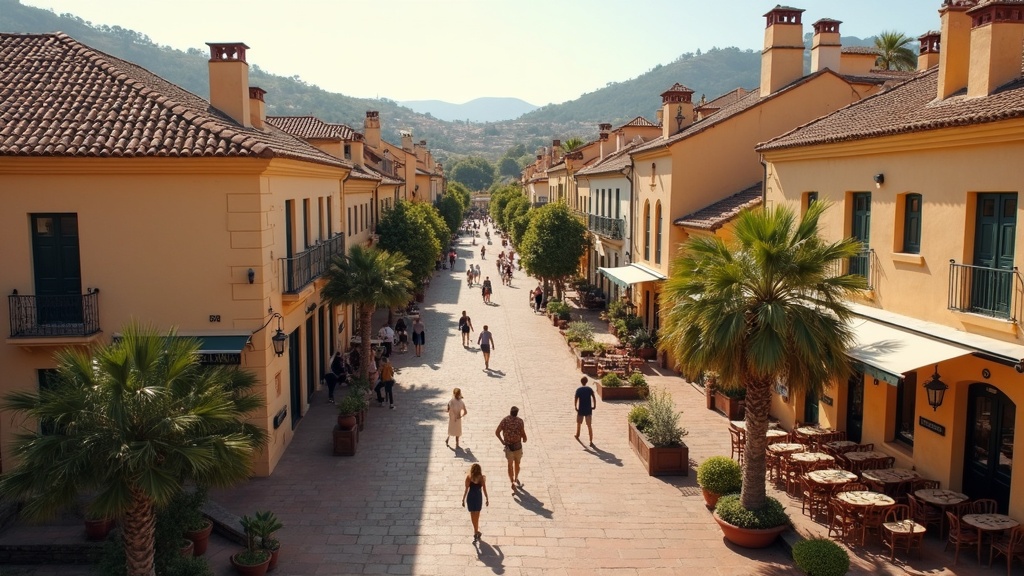
Why Does the Costa del Sol Maintain Such Stable Winter Weather?
After fifteen years advising international buyers on the Costa del Sol, I can confidently state that December's spring-like temperatures aren't marketing hyperbole—they're meteorological reality. The region's unique geographical position creates a microclimate that delivers consistent warmth when Northern Europe shivers.
The Mediterranean climate here is characterised by the moderating influence of the nearby Gibraltar Strait and the protective barrier of the Sierra Nevada mountains. This combination shields the coast from harsh continental weather systems, maintaining average December daytime temperatures between 15-18°C (AEMET 2025). Night temperatures rarely drop below 8°C, and frost is virtually unknown along the coastal strip.
December brings approximately 6 hours of daily sunshine—more than many Northern European locations receive in midsummer. Rainfall, whilst December is typically the wettest month, arrives in short, intense bursts that quickly give way to clear skies. The region records just 8-12 rainy days per month during winter (Junta de Andalucía 2025).
This stability isn't coincidence. The Alboran Sea's thermal mass moderates temperature extremes, whilst the Sierra Nevada acts as a natural windbreak against cold northerly air masses. The result? A climate where Christmas Day beach walks aren't just possible—they're delightful.
What This Means for International Property Buyers
For my Northern European clients—particularly those affluent 45-70 year-olds seeking second homes or retirement properties—these winter conditions represent exceptional value. Where else can you guarantee 18°C sunshine whilst Stockholm endures -5°C and perpetual darkness?
The practical implications are substantial. Properties here aren't seasonal investments gathering dust for six months annually. Instead, they offer year-round utility. My Swedish clients regularly report hosting Christmas gatherings on their terraces, whilst German buyers appreciate conducting business calls from sun-drenched home offices when their Munich counterparts huddle indoors.
December's mild conditions particularly benefit golf enthusiasts. The Costa del Sol's 70+ courses remain playable throughout winter—indeed, many consider December through February peak season, avoiding summer's intense heat. Green fees are often reduced, and tee times readily available. Properties overlooking golf courses maintain their appeal regardless of season.
Rental yields also benefit from extended seasons. Winter tourism has grown 23% over five years (INE 2025), with December occupancy rates now reaching 65% in premium coastal areas. Properties that might lie empty elsewhere generate income throughout the year here.
The Costa del Sol's Winter Advantage
This region's winter appeal extends beyond comfortable temperatures. The reduced tourist density of December creates an authentic Spanish experience often masked during peak season. Local markets, restaurants, and cultural venues operate at a more relaxed pace, allowing genuine integration with Spanish life.
Health benefits are measurable. Vitamin D synthesis continues throughout winter months, supporting mood and immune function when Northern Europeans typically experience seasonal deficiency. The ability to maintain outdoor exercise routines—cycling, hiking, tennis—provides physical and mental health advantages worth quantifying in any cost-benefit analysis.
The Sierra Nevada's proximity offers dramatic contrast opportunities. Within 90 minutes, you can transition from 18°C coastal sunshine to snow-covered peaks at 3,400m altitude. December skiing at Sol y Nieve, followed by afternoon drinks on a Marbella terrace, epitomises the lifestyle flexibility this location provides.
Cultural richness doesn't hibernate either. Málaga's museums, including the Picasso Museum and Pompidou Centre, maintain full programmes. Traditional Christmas markets appear in historic town centres. Flamenco venues continue performances. The combination of culture and climate creates winter vitality absent from more northerly locations.
Your Next Steps
If December temperatures of 15-18°C whilst maintaining Northern European property values appeals to your investment strategy, the Costa del Sol merits serious consideration. The optimal approach involves winter reconnaissance—experiencing the reality of year-round outdoor living before committing to purchase.
I recommend visiting between December and February to witness this microclimate's consistency. Book golf rounds, explore hiking trails, investigate local amenities during their quieter season. Many clients discover that winter's reduced pace actually enhances their property search experience—viewings aren't rushed, local professionals have more availability, and you'll experience genuine community atmosphere.
Consider the practical elements: heating costs minimal, no winter property maintenance concerns, and the ability to escape Northern European winter whenever desired. These aren't luxuries—they're lifestyle fundamentals that improve with each passing year.
Our experience suggests that buyers who investigate during winter months make more informed decisions. They understand the year-round value proposition rather than being swayed by summer euphoria. Emma, our AI property advisor, can help identify suitable areas matching your specific winter living requirements, whether that's golf course proximity, cultural venue access, or optimal rental potential.
Buyer decision matrix
| Factor | Why it matters | What buyers should verify |
|---|---|---|
| Documents | Wrong sequencing can delay the purchase. | NIE, lawyer, bank account, tax budget and payment evidence. |
| Costs | The asking price is not the full budget. | Taxes, notary, registry, lawyer, bank, insurance and community fees. |
| New build | Off-plan payments need protection. | Licence stage, bank guarantees, payment plan and handover terms. |
Local buyer context
A safe buying decision connects documents, banking, tax, legal review and local practice before reservation.
A buyer comparing London, Belfast, Dublin, Manchester or Amsterdam routes usually weighs flight rhythm, family visits, remote work and quieter-month practicality.
For new builds, connect the topic with licences, payment plan, materials, shared facilities, handover and aftercare.
New-build focus: For new builds, connect the topic with licences, payment plan, materials, shared facilities, handover and aftercare.
