
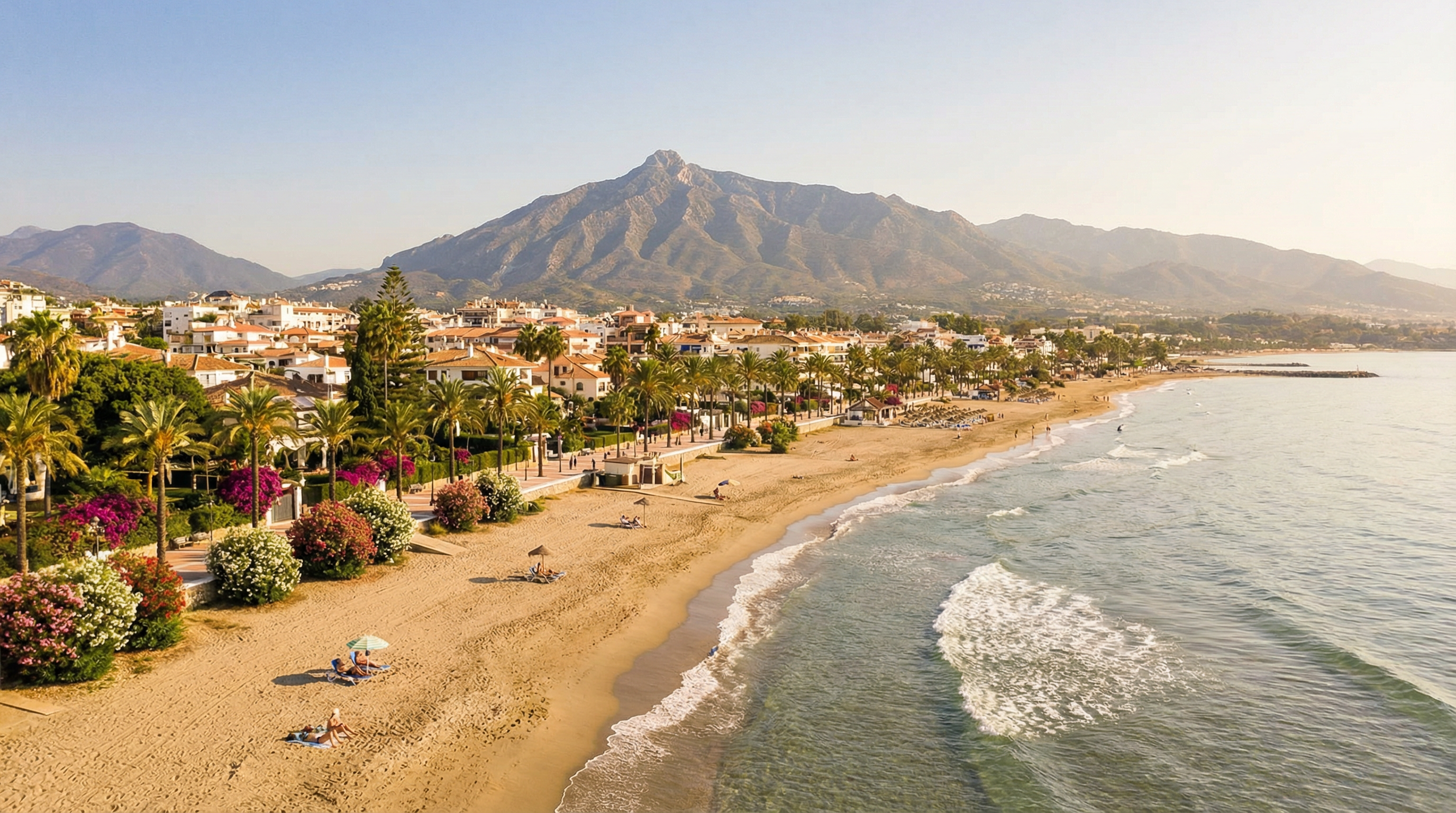
We’re writing this from a beachfront café in Puerto Banús, where the late-afternoon sun warms the boardwalk and Sierra Blanca glows just behind us. If you’ve ever wondered why the Costa del Sol seems to bathe in light while the rest of Europe shivers, you’re not imagining it. There’s a microclimate secret here that shapes everyday life—and great property decisions.
Introduction: Why is the Costa del Sol the Sunniest Region in Europe? – The Microclimate Secret of Andalusia
Over years helping international buyers find homes from Marbella to Estepona, we’ve learned to plan viewings around sea breezes and sun angles. The Costa del Sol offers around 2,900–3,000 sunshine hours annually, far above many Mediterranean coasts [AEMET climate normals 1991–2020]. That consistency makes outdoor living easy and real estate more usable year-round.
Mountains, winds, and warm seas work together to block storms, smooth temperatures, and keep clouds moving. Understanding how those forces vary by town—even by street—helps you choose the right home with the right orientation, breeze, and comfort level. Let’s unpack the science in friendly, buyer-focused terms.
Overview: How Mountains, Seas, and Winds Create a Sunbelt
The Costa del Sol runs along Málaga province, backed by the Penibetic ranges: Sierra Blanca, Sierra de Mijas, and Sierra de las Nieves. These ridges create a protective wall that deflects Atlantic fronts and generates a dry Foehn effect as air descends toward the coast [AEMET wind regime Andalusia].
The Alboran Sea moderates extremes, keeping winters mild and summers more temperate than inland. Meanwhile, the Strait of Gibraltar funnels two dominant winds—Levante (from the east) and Poniente (from the west)—that regularly sweep away cloud cover and humidity pockets [AEMET Strait of Gibraltar winds].
The three-part shield you can feel
In our experience, you’ll notice the “shield” in small ways: a warm, still morning in Nueva Andalucía, a crisp Poniente afternoon in Estepona, or cooler evenings up in Mijas Pueblo. The pattern repeats along the coast and underpins its famous winter warmth and blue skies.
- Mountain barrier: Rain shadow and Foehn drying reduce persistent cloud cover [AEMET Andalusia precipitation climatology].
- Sea buffer: Alboran currents even out temperatures; winter sea stays relatively mild [Puertos del Estado sea temperature Málaga].
- Wind flush: Levante and Poniente clear skies and moderate heat spikes [AEMET Strait of Gibraltar winds].
Key Benefits for Buyers: Comfort, Usability, and ROI
More sunshine doesn’t just feel better—it performs better. Homes are lived in more months of the year, terraces see real use, and rental calendars stretch well into spring and autumn. When you’re comparing properties, this microclimate becomes a real value driver.
We’ve seen families choose south-west terraces for golden-hour dinners, golfers favor Poniente-cooled valleys, and remote workers enjoy bright winter days without cranking the heating. These small choices add up to efficient living and resilient demand.
Five practical advantages you can bank on
- Year-round living: Mild winters mean usable terraces from November to March; daily highs often sit around 17–20°C in winter months [AEMET Málaga monthly means].
- Lower seasonality: More sunny days extend shoulder-season rentals and holiday use [INE tourism overnights Andalusia, seasonality].
- Energy efficiency: South/south-west exposure plus shading cuts winter heating and summer cooling when designed well.
- Outdoor lifestyle: Walking, cycling, golf, and padel remain comfortable most of the year.
- Property resilience: Well-oriented homes ride out heatwaves and cool nights better than inland equivalents.
Process: How to Read the Microclimate Street by Street
On paper, the coast shares the same sun. On the ground, blocks differ by breeze, humidity, and winter sun angles. Here’s the step-by-step we use on every viewing to judge comfort and seasonality before you sign a reservation.
Use this checklist whether you’re focusing on Marbella’s Golden Mile, Estepona’s new west-side neighborhoods, or the hills of Benahavís and Mijas.
Seven steps we use on every viewing
- 1) Orientation test: Aim for south to south-west terraces. In winter, check 3–5 pm sun reach. Avoid deep north-facing living rooms if you value winter light.
- 2) Altitude band: Homes 80–250 m above sea level often enjoy cooler evenings and views, with slightly more breeze. Great in summer; add winter sun exposure to balance.
- 3) Breeze corridors: Ask about Levante/Poniente patterns. Estepona west often catches Poniente (cooler afternoons); east Marbella can feel Levante. Visit twice if possible.
- 4) Humidity check: Look under sinks and in wardrobes for musty smells. Coastal humidity rises overnight; cross-ventilation and dehumidifiers help in shoulder seasons.
- 5) Thermal mass and glazing: Quality double/triple glazing and exterior shading (pergolas, louvres) smooth day-night swings.
- 6) Noise and wind: Exposed headlands get wind noise on stormy days. Courtyard layouts or windbreak planting reduce it.
- 7) Micro-mapping: Walk the immediate streets morning and late afternoon. Shade from neighboring buildings can cool summer but may steal winter light.
If you’re buying from abroad, we’ll film sun paths and sound a wind meter during virtual tours to document the feel of each home [remote buying and virtual viewing guide Spain]. It’s part science, part intuition perfected over hundreds of viewings.
Important Considerations: Sunshine Comes with Seasonal Twists
Even the sunniest coast sees swings. Rain concentrates into short episodes—especially with DANA (a cut-off low) events that can trigger intense downpours [AEMET DANA definition and episodes]. Some valleys collect humidity; hill fringes face wildfire restrictions in dry summers.
Plan for these edge cases and your home will be more comfortable and compliant year-round.
What to check before you reserve
- Flood and runoff: Ask for municipal flood-risk maps (ARPSI) and site drainage details. Elevated plots with swales and grated drains handle cloudbursts better [Junta de Andalucía flood risk mapping].
- Wildfire interface: Properties near forest land may face seasonal clearance rules and ember-risk mitigation; review INFOCA guidance and local ordinances [Junta de Andalucía INFOCA regulations].
- Calima (Saharan dust): Periodic dust episodes can haze skies and settle on terraces. Rinse systems and washable fabrics help [Spanish meteorological guidance on Saharan dust].
- Drought measures: In dry years, municipalities may restrict irrigation or pool top-ups; check current provisions before purchase [Junta de Andalucía drought measures].
- Building envelope: Good shading, insulation, and cross-ventilation trump raw orientation alone. Review energy certificate and summer comfort details.
We include these verifications in our due diligence pack alongside title checks and community rules [buyer due diligence checklist Spain]. It’s how we de-risk your purchase beyond the brochure weather.
Market Insights: Where the Microclimate Shines Right Now
Some pockets catch the microclimate just right. In Marbella, the Golden Mile and Sierra Blanca foothills sit behind a strong mountain shield with winter sun and quick beach access. Nueva Andalucía’s Golf Valley enjoys breezy afternoons and cooler nights in summer.
Benahavís, with elevations from 150–400 m, often runs a couple of degrees cooler after sunset—great for July barbecues. East Marbella (Elviria–Cabopino) gets airy afternoons and sheltered dunes, while Estepona west benefits from Poniente breezes and dramatic sunsets over Gibraltar.
Data snapshot and traveler patterns
- Sunshine: Málaga’s long-term sunshine hours average roughly 2,900–3,000 per year, with winter means near 5–6 hours/day and summer 10–11 hours/day [AEMET climate normals 1991–2020].
- Temperatures: Annual mean is around 18–19°C at the coast; inland valleys show warmer highs and cooler nights [AEMET Málaga climatology].
- Sea temps: Typical winter 16–18°C; summer peaks 22–24°C near Málaga buoy sites [Puertos del Estado oceanographic data].
- Season extension: Overnight stays in shoulder months have trended upward, reflecting reliable sun and milder climate [INE Andalucía tourism monthly series].
For property hunters, that stability translates into meaningful occupancy in March–May and late September–November. It’s one reason well-oriented terraces and heated pools command a premium in the best micro-zones [property market report Costa del Sol].
Expert Tips from 35+ Years Combined Experience
We’ve guided over 500 families through this coast’s quirks. These quick wins make homes kinder in July and joyful in January—without overbuilding or overspending.
Use them as a checklist when you view, renovate, or specify a new-build.
Quick wins for comfort and ROI
- Prioritize winter sun: South–southwest terraces keep lunches outdoors from November to March.
- Design shade smartly: Adjustable pergolas or louvres block high summer sun but invite low winter rays.
- Choose breathable finishes: Lime-based paints and vented wardrobes reduce coastal humidity.
- Ventilate at night: In summer, cross-ventilation plus ceiling fans can trim AC hours significantly.
- Specify high-performance glass: Low-e glazing near west facades tames late-day heat gain.
- Add a small heat source: A modern pellet or gas fireplace makes winter evenings cozy without central heat.
- Pool pragmatics: A simple cover or heat pump adds 2–3 usable months to your pool season.
- Landscape with wind in mind: Hedges double as windbreaks on exposed plots—quieter terraces, less spray.
If you’re comparing new-builds, ask developers about U-values, solar control factors, and summer comfort simulations—not just EPC letters [new developments due diligence on Costa del Sol]. We’ll translate the specs into real, lived comfort.
Conclusion: Let the Microclimate Guide Your Search
The Costa del Sol’s microclimate is no myth—it’s a daily comfort advantage shaped by mountains, sea, and wind. When you align orientation, breeze, and elevation with your lifestyle, you get a home that feels “just right” 10–12 months a year.
If you’d like a climate-smart shortlist tailored to how you live, we’re here to help—no push, just honest advice from years on this coast. Start with your brief and we’ll map the sun, wind, and views together [personalised property brief Costa del Sol][area guides for Marbella, Estepona, Mijas][beachfront and sea-view property guide][golf properties in Marbella and Benahavís][buying process in Spain explained][mortgage options for non-residents Spain][property management and rental strategy Costa del Sol].
