
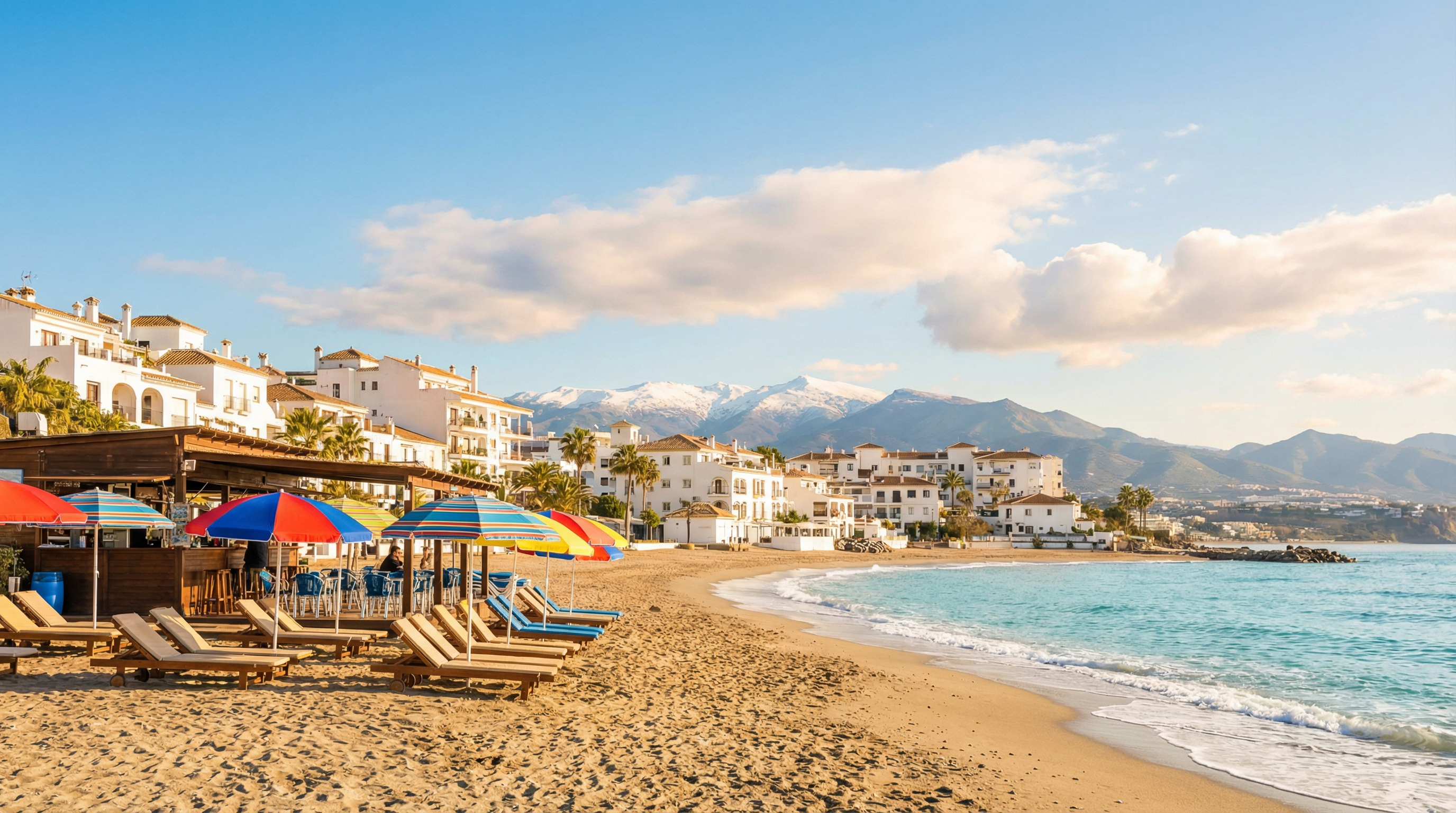
We’re writing this from a beachfront café in Puerto Banús, where winter mornings feel like spring. Over decades guiding international families, we’ve learned that Costa del Sol’s microclimate isn’t a slogan—it’s a daily reality that shapes how you live, invest, and enjoy your home. So, why is the Costa del Sol the sunniest region in Europe? The microclimate secret of Andalusia sits at the heart of it.
Why is the Costa del Sol the Sunniest Region in Europe? – The Microclimate Secret of Andalusia
The Costa del Sol sits between protective mountains and a warm sea. Sierra Blanca, Sierra Bermeja, and the Montes de Málaga deflect Atlantic lows and trap warmer air near the coast. The Mediterranean—specifically the Alborán Sea—stabilizes temperatures, reducing frost and keeping nights milder [AEMET climate normals 1991–2020].
Two local winds complete the picture. The westerly Poniente brings clear, dry air that scrubs clouds, while the easterly Levante can be warm and humid, yet often forms rain shadows west of Málaga. The net effect: 2,800–3,100 sunshine hours annually across much of the western Costa del Sol and fewer rainy days than most of Europe [AEMET climatology overview].
The four climate drivers you’ll actually feel
After hundreds of property tours, we see four forces at work:
- 1) Mountain shield: Sierra Blanca (Marbella) and Sierra Bermeja (Estepona) block cold, wet fronts; hills behind Mijas and Benalmádena create a lee-side effect—warmer, calmer pockets even in January [AEMET synoptic patterns Andalusia].
- 2) Sea moderation: The Alborán Sea tempers extremes—winter days nudge 16–20°C and nights rarely drop near freezing on the coast [AEMET maritime data Alborán Sea].
- 3) Cloud-clearing winds: Poniente lowers humidity and increases visibility; Levante raises humidity but can create sunshine west of Málaga when cloud banks anchor to the east [AEMET wind climatology].
- 4) South and southwest aspects: Valleys and terraces facing the sun capture radiant heat and cut winter shade—key for terraces and pools.
In our experience, Marbella’s Golden Mile and Nueva Andalucía often feel 1–2°C warmer on calm winter days than exposed beachfront east of Málaga. Conversely, summer sea breezes make Benalmádena Costa and San Pedro Alcántara feel cooler at peak heat. These nuances matter when you choose a home.
What the Microclimate Means for Your Lifestyle and Investment
For buyers, the microclimate isn’t trivia—it’s a return-on-lifestyle and return-on-investment driver. More sunny days mean more usable terraces, longer pool seasons, and higher shoulder-season rental demand. Lower humidity pockets also reduce mold risk and maintenance headaches in storage areas and basements.
Operationally, we see owners with sun-smart orientation cutting winter heating and shoulder-season lighting costs. Sea-breeze corridors improve comfort without overreliance on air-con. And with sunlight arriving early and staying late, home layouts can prioritize natural light over energy-hungry fixtures [Spanish Building Code CTE energy efficiency].
Five practical benefits owners feel within the first year
What we observe with our clients:
- 1) Year-round outdoor living: 10–11 months of terrace use is common; winter lunches al fresco are normal from Benalmádena to Estepona.
- 2) Energy comfort: South/southwest exposure plus cross-ventilation slashes shoulder-season HVAC use.
- 3) Strong shoulder seasons: Guests book April–June and Sept–Nov as reliably sunny—boosting annual occupancy [Junta de Andalucía tourism statistics].
- 4) Health and wellness: More light equals more daily activity; many buyers report improved winter mood and routines.
- 5) Maintenance predictability: Lower winter dampness, if ventilated, means fewer surprises in wardrobes and storerooms.
If rentals are in your plan, review seasonality and occupancy by area [rental yields and seasonality Costa del Sol]. For a lifestyle-first approach, match exposure and breeze patterns to how you’ll actually live, not just how a listing looks on a sunny day.
How to Experience the Microclimate on a 3-Day Scouting Trip
We always suggest a climate-focused viewing trip. It’s the fastest way to feel the differences between beachfront, golf valley, and hillside locations—and how winds and shade lines change hour by hour.
Bring a simple toolkit: a phone compass, a sun-path app, a humidity sensor, and sensible shoes. You’ll collect the data that photos can’t show.
Three-day plan to “sense-check” the sun
Use this rhythm to experience the region’s microclimate:
- Day 1: Marbella and Nueva Andalucía. Note morning shade on terraces; walk leeward streets under Sierra Blanca. Lunch outdoors to test winter comfort. Finish on the beach for the Poniente breeze at sunset. Consider a structured itinerary [property viewing trip in Costa del Sol].
- Day 2: Benalmádena and Mijas. Compare coastal humidity to Mijas Pueblo’s cooler, drier feel. Check how wind channels between ridges affect noise and comfort.
- Day 3: Estepona and the New Golden Mile. Test late-afternoon sun on west-facing terraces. Visit a riverbed (arroyo) after rain to understand runoff; it informs due diligence [flood and environmental due diligence Spain].
As you go, shortlist neighborhoods that fit your climate comfort. Then layer in schools, amenities, and commute needs [schools and lifestyle in Costa del Sol].
What to measure at each property
We walk clients through this simple test set:
- 1) Orientation: Use your compass: south to southwest maximizes winter sun. East is lovely at breakfast, but can be shaded by 15:00 in winter [orientation and sun-path guide for Costa del Sol homes].
- 2) Shade line timestamps: Photograph terraces at 10:00, 13:00, and 16:00. Winter angles surprise many buyers.
- 3) Cross-ventilation: Open opposite windows. Feel the breeze and note the direction; Poniente vs. Levante days behave differently.
- 4) Humidity and smell: Check wardrobes and utility rooms. Aim for 45–60% relative humidity; persistent mustiness needs investigation.
- 5) Noise and exposure: Wind whistling at corners or through gaps hints at blast zones on Levante days.
We’ll help you capture and compare these notes, then map them against your priorities and budget [buying process in Andalusia step-by-step].
Risks and Trade-offs to Watch Before You Buy
Every climate advantage has trade-offs. Wind corridors cool terraces but can rattle awnings. Beachfront brings salt-laden air that ages metalwork faster. Certain valleys trap evening humidity; others channel gusts that tip patio umbrellas. Knowing the pattern upfront prevents surprises.
Occasional heavy autumn or spring downpours test drainage. Homes near arroyos need extra scrutiny on flood exposure, finished-floor height, and community infrastructure. Calima (Saharan dust) can visit a few times a year—easy to clean, but worth factoring into maintenance plans [AEMET calima advisories].
Due diligence we perform for clients
Our standard checks include:
- 1) Flood and runoff maps: Review official hazard layers and local plans for arroyos and coastal setbacks [Junta de Andalucía flood risk maps].
- 2) Construction details: Inspect seals, roof drainage, terrace slopes, and coastal-grade metals; verify building permits for enclosures.
- 3) Ventilation design: Cross-ventilation paths, louvered doors for laundries, trickle vents; energy certificate notes airflow assumptions [Spanish Building Code CTE energy efficiency].
- 4) Community rules: Awnings, glass curtains, and pergolas may need approval; vital for sun control.
- 5) Insurance scope: Confirm flood and wind coverage; some zones need explicit riders.
We also benchmark utility costs and recommend materials resilient to salt and sun [utility setup and costs in Spain].
Market Insights: Where the Microclimate Premium Shows
In our recent transactions, homes with strong winter sun and breeze-friendly layouts attract 5–12% higher offers than shaded comparables, all else equal. Buyers pay for terraces they can use 10 months a year, not just in August. That premium is clearest in Marbella’s Golden Mile and west-facing Estepona zones.
Tourism data show longer shoulder seasons on the western Costa del Sol than inland Andalusia; hotel and apartment occupancy rises early in spring and holds into late autumn—mirroring private rentals [INE tourism occupancy Costa del Sol]. Investors leverage this with flexible-stay calendars and heating-efficient builds.
Microclimate pockets by area (our on-the-ground view)
Here’s how we describe the feel of key zones:
- Marbella Golden Mile: Mountain lee; warm, often calmer winter air. Excellent winter sun on mid-floor terraces.
- Nueva Andalucía Golf Valley: Sheltered mornings; check afternoon shade from fairway trees in winter.
- San Pedro/Guadalmina: Gentle Poniente breezes; wide beaches, cooler at peak summer—great for families [best areas to live in Marbella and Estepona].
- Benalmádena Pueblo to Stupa ridge: Cooler nights, superb views; stronger Levante gusts at exposed corners.
- Mijas Costa and Golf: Warmer inland pockets; watch humidity in low-lying plots after rain.
- East Marbella (Las Chapas/Cabopino): Beautiful beaches; more Levante days—excellent for natural ventilation planning.
- Estepona/New Golden Mile: Long afternoons of sun; Sierra Bermeja shelter helps winter comfort.
- Manilva/Casares Costa: Airy and open; Poniente can be brisk—great in summer, plan wind screens.
If you’re weighing new-build vs resale, note that modern designs often optimize orientation, glazing, and shading—useful advantages in this climate [new-build vs resale homes in Marbella].
Expert Tips to Choose a Sun-Smart Home
We’ve pooled lessons from 500+ family purchases to design a simple set of selection rules. They’ll save you time and boost day-to-day happiness in your home.
Test them on-site, ideally morning and late afternoon, in both Poniente and Levante conditions if possible.
Seven rules we apply for clients
Follow these steps:
- 1) Prioritize winter sun: South/southwest main terrace, with roof overhangs to block high summer sun.
- 2) Demand cross-ventilation: Bedrooms on opposite facades or corner units; ceiling fans reduce AC spikes.
- 3) Inspect drainage: Terraces need outward fall, accessible scuppers, and sealed thresholds to handle downpours.
- 4) Salt-smart materials: Anodized or marine-grade rails, porcelain tiles, and UV-stable sealants near the sea.
- 5) Shade flexibility: Pergolas or retractable awnings; glass curtains extend winter terrace use.
- 6) Elevation balance: A little height gains sun and views; too high increases wind—test comfort at 16:00.
- 7) Pool season check: Ask community about heating and opening months; the microclimate helps, but rules decide reality.
If financing, consider how lower HVAC loads support affordability and stress tests with lenders [mortgage options for non-residents Spain].
Conclusion: Experience It, Then Buy with Confidence
We’ve helped hundreds of families translate Costa del Sol’s microclimate into happier daily living and smarter investments. The secret lies in a mountain shield, a temperate sea, and reliable winds—giving you light-filled homes, long terrace seasons, and steady rental demand.
Let’s plan a climate-smart viewing trip that tests orientation, breeze, and shade lines in your preferred areas. We’ll align your shortlist with lifestyle and numbers—from utilities to rentals—so you can buy with clarity [property viewing trip in Costa del Sol] [buying process in Andalusia step-by-step].
Buyer decision matrix
| Factor | Why it matters | What buyers should verify |
|---|---|---|
| Documents | Wrong sequencing can delay the purchase. | NIE, lawyer, bank account, tax budget and payment evidence. |
| Costs | The asking price is not the full budget. | Taxes, notary, registry, lawyer, bank, insurance and community fees. |
| New build | Off-plan payments need protection. | Licence stage, bank guarantees, payment plan and handover terms. |
Local buyer context
A safe buying decision connects documents, banking, tax, legal review and local practice before reservation.
A buyer comparing London, Belfast, Dublin, Manchester or Amsterdam routes usually weighs flight rhythm, family visits, remote work and quieter-month practicality.
For new builds, connect the topic with licences, payment plan, materials, shared facilities, handover and aftercare.
New-build focus: For new builds, connect the topic with licences, payment plan, materials, shared facilities, handover and aftercare.
