
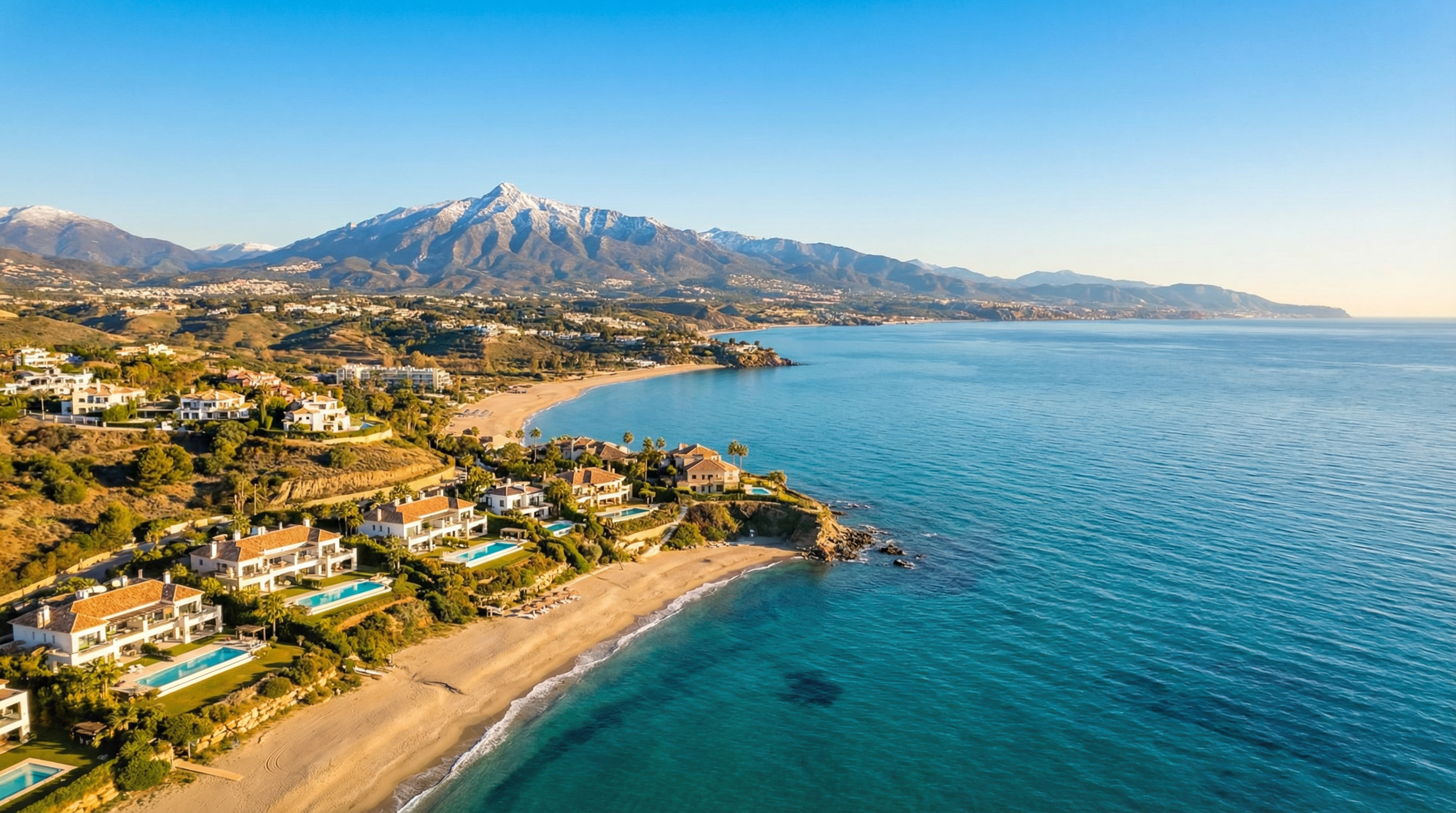
Sitting at a beachfront café in Puerto Banús, we’re often asked: Why is the Costa del Sol the Sunniest Region in Europe? – The Microclimate Secret of Andalusia. After guiding over 500 families through the Spanish property journey, we’ve seen how this sunshine shapes daily life, investment returns, and wellbeing. In plain terms: mountains, sea, and stable pressure patterns work together to gift us more bright days than almost anywhere on the continent. As local specialists with decades on the ground, we’ll unpack the science, the lifestyle perks, and the practical steps you should take when choosing a home here.
What exactly makes the Costa del Sol so sunny?
Three forces lock in the light: the Cordillera Penibética mountains, the Alborán Sea, and the persistent Azores High. Together they deflect storms, dry incoming air, and smooth daily temperature swings. The result is long, bright seasons and fewer cloud-forming mechanisms compared with much of Europe. [AEMET climate normals 1991–2020] [WMO subtropical high-pressure belts]
The science in three steps
1) Mountains block and dry: Sierra Blanca (Marbella), Sierra Bermeja (Estepona), and Mijas hills create a rain shadow via a mild Föhn effect, lowering cloud cover.
2) Sea moderates: the cool, stable Alborán Sea tempers extremes and discourages convection.
3) High pressure dominates: the Azores High promotes subsidence, suppressing clouds much of the year. [AEMET synoptic climatology of Spain] [Copernicus Climate bulletin]
- Typical sunshine: 2,900–3,200 hours yearly on the western Costa del Sol; winter days often reach 16–18°C with bright skies. [AEMET climate normals Málaga 1991–2020]
- Prevailing breezes: Poniente (west) brings drier, clearer air; Levante (east) can add humidity and occasional haze toward Gibraltar. [AEMET wind climatology Strait of Gibraltar]
For a deeper climate-by-month view, see our seasonal breakdown [Costa del Sol weather by month and what to expect].
Where does the “microclimate” show most on the coast?
Not all sunny days feel the same. The coastal arc from Marbella’s Golden Mile to Estepona’s New Golden Mile is famously sheltered, while Benahavís enjoys cooler nights inland. East Marbella feels more Levante-sensitive, and Mijas-Pueblo sits above the marine layer on certain spring mornings. These nuances matter when you pick your home.
Area-by-area micro-notes you can use
1) Marbella Golden Mile: Sierra Blanca’s wall often reduces cloud; winter terraces feel warmer by late morning.
2) Nueva Andalucía/Benahavís valleys: warm days, cooler nights; great for sleep quality in summer.
3) Estepona West: slightly breezier with Poniente, superb air clarity.
4) East Marbella (Los Monteros/Cabopino): sporadic Levante humidity; glorious morning sun for early risers.
5) Mijas Costa/La Cala: balanced sea breezes; check local ridge shade in midwinter afternoons.
- If you love year-round al fresco lunches, south to southwest orientation is your friend.
- Golf-side homes in Nueva Andalucía often have gentle valley breezes—pleasant in July/August.
- Hillside plots get more winter sun angles but can be wind-exposed; always field-test. [viewing checklist for Costa del Sol homes]
Curious how Marbella, Estepona, Fuengirola, Benalmádena, and Mijas compare for lifestyle? Explore our side-by-side local insights [Marbella vs Estepona vs Mijas – area guide for buyers].
How does all this sunshine benefit you as a property buyer?
Sun consistency drives livability and returns. You’ll enjoy a longer outdoor season, lighter winter utility bills, and attractive off-peak rental demand. In our experience across €120M in transactions, south-facing terraces and wind-sheltered plots routinely command stronger interest and better booking calendars for holiday lets.
Four practical lifestyle and investment upsides
1) Extended terrace life: 10–11 comfortable outdoor months with the right orientation and wind shielding.
2) Energy efficiency: winter heating needs are modest in well-insulated homes; solar gains help. [Código Técnico de la Edificación (CTE) energy efficiency requirements]
3) Wellness factor: more daylight supports mood and outdoor routines year-round.
4) Rental resilience: mild winters attract golfers and remote workers; coastal occupancy stays steadier than northern Med. [Andalucía tourism occupancy statistics – IECA]
- For investors, check municipal holiday-let licensing before you buy. Rules vary block-by-block. [holiday rental license rules in Andalusia]
- Thinking of a second home first, rental second? We’ll model dual-use calendars with you. [Costa del Sol buying process – step by step]
How do you evaluate sun, wind, and shade when viewing homes?
We field-test microclimate on site—phones down, senses up. Winter sun angles and summer breezes decide how a terrace lives more than any photos. Here’s our quick method used on hundreds of viewings.
The 7-step microclimate check on every viewing
1) Orientation: confirm compass—true south to southwest maximizes winter sun.
2) Horizon scan: spot ridges/buildings that may shade you at 3–5 pm in December/January.
3) Wind notes: bring a light ribbon; observe breeze direction at terrace height in different rooms.
4) Thermal mass: touch walls/floors at 5 pm; stored warmth reveals winter comfort.
5) Cross-ventilation: open opposing windows; count seconds to feel a pressure change.
6) Humidity check: a pocket hygrometer helps; aim 40–60% indoors in winter.
7) Noise vs breeze: Poniente is calming; Levante can whistle—listen in corners.
- Use a sun-path app to simulate solstice and equinox shadows at 10 am, 2 pm, and 5 pm.
- If a terrace loses winter sun by 2 pm, consider retractable glass, wind screens, or a patio heater plan.
- Plan shading for July/August: pergolas, awnings, deciduous planting. [energy-efficient home features for the Spanish sun]
Need financing to secure the right orientation and outdoor space? Explore your options as a non-resident. [mortgage options for non-residents Spain]
What should you watch for despite the sunshine?
Even a dream climate has quirks. Calima dust from the Sahara can reduce visibility for a day or two; late autumn can bring short, intense downpours. Drought cycles may trigger water-saving measures, and hillside areas carry seasonal wildfire rules for landscaping.
Key cautions and easy mitigations
1) Calima: fit good window seals and consider MERV-13 filters; plan a rinse tap on terraces. [AEMET advisories on Saharan dust events]
2) Rain bursts: ensure oversized terrace drains and proper fall; check for ponding after showers. [Código Técnico de la Edificación – DB HS Salubridad]
3) Drought: prefer communities with efficient irrigation and cisterns; drought plans matter. [Junta de Andalucía drought measures 2025–2026]
4) Fire safety: maintain defensible space on rural plots; native plantings reduce risk. [Junta de Andalucía wildfire prevention regulations]
- Coastal haze is more common near Gibraltar during strong Levante; test views on both wind regimes if vistas are a priority.
- Ask for the building’s energy certificate and insulation details; comfort is design plus climate. [buying process in Spain – documents you’ll need]
How does the microclimate shape today’s market?
Homes that capture winter sun and shelter summer wind command a “comfort premium.” In our deals across Marbella, Estepona, Mijas, Benahavís, and Benalmádena, south–southwest terraces, corner orientations, and wind-protected outdoor rooms reliably reduce time on market.
Signals we watch—and you can too
1) Days on market: bright, sheltered terraces move faster, especially in Q4–Q1 viewings.
2) Tourism flow: Málaga Airport now sees over 20 million passengers per year, sustaining year-round interest. [AENA annual passenger statistics]
3) Infrastructure: new coastal path segments amplify outdoor living demand in micro-sunny pockets. [Diputación de Málaga – Senda Litoral updates]
- Comparing new-build vs resale? Newer homes often blend better glazing and shading—compare terrace depth and overhangs. [new-build vs resale on the Costa del Sol]
- If rentals matter, verify local community statutes on holiday letting and quiet hours. [holiday rental license rules in Andalusia]
What insider tips help you buy for the sun—without overheating?
Comfort is design plus orientation. We design viewing days to cross-check both winter warmth and summer shade potential, so you’re covered 12 months a year. Small details—louver angles, awning reach—make big differences here.
Our 8-point comfort-first checklist
1) Terrace depth: 2.2–3.0 m lets you dine in winter sun and retreat to summer shade.
2) Overhangs: 60–90 cm can cut August solar gain while allowing midwinter rays.
3) Cross-ventilation: dual-aspect living spaces beat AC bills on Poniente days.
4) Exterior blinds/shutters: essential for east and west exposures.
5) Thermal mass: stone/concrete near south glazing smooths winter evenings.
6) Pool: consider heat pumps or covers for November–March swims.
7) Dehumidification: quiet units for shoulder seasons improve sleep quality.
8) Planting: pergolas with deciduous vines create seasonal shade naturally.
- Moving with family? Map morning vs afternoon sun where children play. [international schools and family life in Marbella]
- Planning a relocation timeline? We’ll align area microclimates with your routines. [moving to the Costa del Sol – practical guide]
Frequently asked questions about the Costa del Sol’s microclimate
As we sit with buyers from Amsterdam to Abu Dhabi, the same questions pop up. Here are concise, data-backed answers you can rely on for first-round decisions.
Is Costa del Sol really Europe’s sunniest?
It’s among the sunniest in continental Europe’s coastal zones, consistently logging roughly 2,900–3,200 sunshine hours yearly. The Canary Islands often record even higher hours, but they’re off the mainland. [AEMET climate normals Málaga 1991–2020] [Copernicus solar radiation atlas]
Which months feel best for outdoor living?
March–June and September–November offer peak comfort: bright days, gentle breezes, and mild evenings. July–August are hotter but manageable with shade and cross-ventilation. Winter lunches al fresco are common on south-facing terraces. [Costa del Sol weather by month and what to expect]
What winds matter for daily comfort?
Poniente (west) brings drier, cooler, clearer air—great visibility. Levante (east) adds humidity and can create haze near Gibraltar. Home orientation and wind screens help you harness or soften both. [AEMET wind climatology Strait of Gibraltar]
Will I need heating in winter and big AC in summer?
Most modern homes need light heating on winter mornings/evenings; strong solar gain on south-facing spaces helps. In summer, shading, shutters, and cross-breezes cut AC loads dramatically when designed well. Check the home’s energy certificate and insulation quality. [CTE energy performance certificates]
Does sunshine improve rental returns?
Yes, especially in shoulder seasons when golfers, hikers, and remote workers seek mild weather. Consistent sun supports steadier occupancy beyond summer, though licensing and community rules must be respected. [holiday rental license rules in Andalusia] [IECA monthly occupancy statistics]
How to take the next step with confidence
We’ve helped hundreds of international families match homes to microclimates, not just postcodes. If you’re early in your journey, start with area comparisons and a viewing plan that tests winter sun and summer shade. The right orientation and wind profile can feel like an extra room—year after year.
Your simple 5-step plan
1) Shortlist areas that fit your routines (golf, schools, marina). [Marbella vs Estepona vs Mijas – area guide for buyers]
2) Learn the seasons you’ll use most. [Costa del Sol weather by month and what to expect]
3) Confirm budget and finance. [mortgage options for non-residents Spain]
4) Book a two-season viewing (winter + late spring). [viewing checklist for Costa del Sol homes]
5) Align legal and technical checks. [buying process in Spain – documents you’ll need]
Spain’s golden visa route ended for new applications in 2024, but relocation remains feasible via other pathways. We’ll point you to vetted immigration counsel. [residency options for non-EU buyers in Spain (post–Golden Visa)] [BOE – termination of Golden Visa law 2024]
In my experience, the most loved homes here aren’t the largest—they’re the best oriented. When the winter sun warms your terrace at lunchtime and a gentle Poniente cools July evenings, you feel the microclimate secret in your bones. Ready to experience it on the ground? We’re here to help you plan the perfect, climate-smart viewing.
Buyer decision matrix
| Factor | Why it matters | What buyers should verify |
|---|---|---|
| Everyday use | The home must work outside holiday weeks. | Access, services, noise, parking, running costs and year-round comfort. |
| Resale | Practical use supports future demand. | Location, maintenance, rules, energy and local activity. |
| New build | Specifications shape comfort and costs. | Orientation, shade, ventilation, shared facilities, handover and aftercare. |
Local buyer context
Lifestyle value comes when climate, nature, services, health access and home design support year-round routines.
A buyer comparing London, Belfast, Dublin, Manchester or Amsterdam routes usually weighs flight rhythm, family visits, remote work and quieter-month practicality.
For new builds, connect the topic with licences, payment plan, materials, shared facilities, handover and aftercare.
New-build focus: For new builds, connect the topic with licences, payment plan, materials, shared facilities, handover and aftercare.
